 9900550134
 info@dheehospitals.com


 Trauma and Orthopaedics
 Pediatrics
 Gastroenterology
 Obstetrics and Gynecology
 Neurosurgery and Neurology
 Family Medicine
 Cardiology
 General Medicine
 Oncology and Immunology
 Oncology
 Nephrology
 Nutrition and Dietetics
 Adult Intensive Care
Published on :Oct 26, 2026
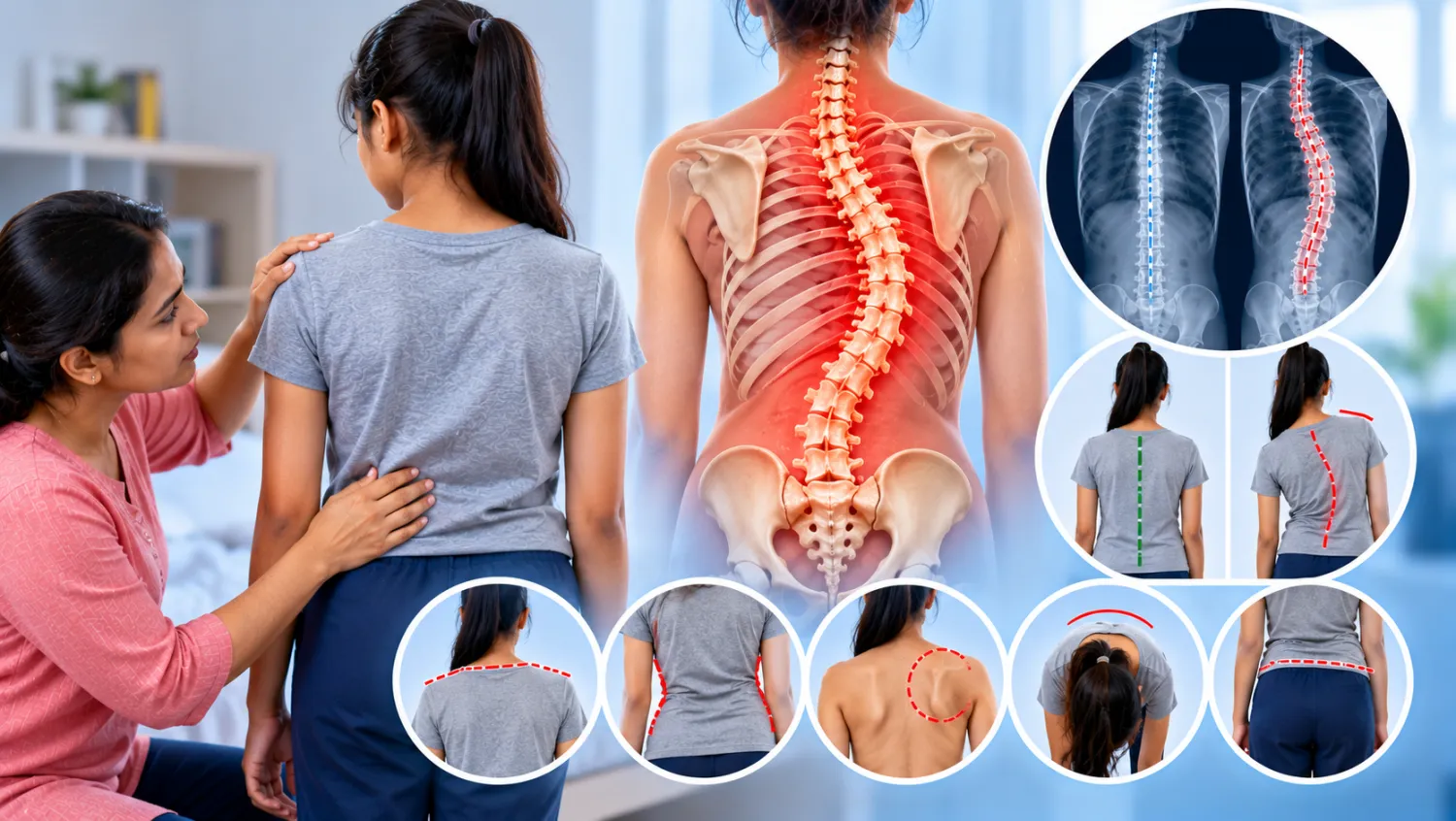
A school shirt hangs unevenly, one shoulder looks higher, or a shoulder blade seems more prominent. Your teenager feels fine, so you wonder whether it is simply posture.
Persistent differences in shoulder, waist or rib height can suggest scoliosis and deserve assessment. Many curves remain mild, but some progress during growth. Noticing changes early gives the specialist time to monitor them and consider treatment when appropriate.
If you are searching for scoliosis treatment Bangalore, start with a clinical assessment rather than assuming your child needs a brace or operation.
What Is Scoliosis?
Scoliosis is a sideways spinal curve, usually accompanied by rotation of the vertebrae. This rotation can make one side of the ribs or back appear more prominent.
The spine normally curves when viewed from the side. Scoliosis refers to abnormal sideways curvature assessed from the front or back.
A curve measuring at least 10 degrees on an appropriate standing radiograph is generally classified as scoliosis.
Adolescent Idiopathic Scoliosis
This is the most common form in teenagers, usually developing between ages 10 and 18. “Idiopathic” means there is no identified underlying cause.
It is not caused by laziness or a teenager failing to sit straight. Family history can be relevant, so mention relatives with spinal curvature.
Scoliosis Symptoms in Teenagers
Parents may notice:
- One shoulder blade sticking out more.
- Different spaces between each arm and the waist.
- One hip appearing higher.
- The trunk leaning to one side.
- Uneven ribs when bending forward.
- Clothes fitting asymmetrically.
These changes are often more noticeable during a growth spurt.
Uneven Shoulders in Child: Does It Always Mean Scoliosis?
No. Posture, muscle differences and other factors can affect symmetry.
A single observation cannot establish a diagnosis. Arrange assessment if the difference persists, becomes clearer or accompanies other changes.
Avoid repeatedly telling your teenager to straighten up as though the appearance is their fault.
How Can Parents Notice Changes Respectfully?
With your teenager’s agreement, look at their back while they stand comfortably with arms relaxed. Notice shoulder, waist and hip symmetry without asking them to pose.
A clinician may perform a forward-bend examination to look for rib or back prominence. Home observations cannot measure the curve or predict progression.
Do not press on the spine or try to correct it manually.
For scoliosis treatment Bangalore families should describe what changed and when, rather than relying on photographs alone.
Does a Curved Spine in Teenager Always Cause Pain?
No. A teenager may have scoliosis without pain or difficulty playing sport.
Back pain can also occur for unrelated reasons. Significant or persistent pain deserves assessment rather than automatically being attributed to the curve.
New weakness, altered walking, numbness or bladder and bowel changes need urgent medical attention. These are not typical findings of uncomplicated adolescent scoliosis.
Why Does Growth Matter?
Some curves worsen while the skeleton is growing rapidly. Progression risk depends on curve size, pattern and how much growth remains.
A small curve near the end of growth may require a different approach from the same curve in a younger child.
There is usually time for a planned assessment, but postponing review for many months can miss a useful treatment window.
What Happens During Assessment?
The doctor reviews growth, family history, symptoms and previous medical conditions. Examination includes posture, spinal alignment and neurological function.
Scoliosis X-Ray
Standing images help measure the curve using the Cobb angle. They also provide information about spinal balance and skeletal maturity.
Imaging should be clinically justified, with exposure minimised where possible. Bring earlier images to appointments so the team can assess change without unnecessary duplication.
Is MRI Always Needed?
No. MRI may be recommended for unusual curve patterns, neurological findings, significant pain or other concerns.
It is not routinely necessary for every typical presentation.
What Treatment Might Be Recommended?
For scoliosis treatment Bangalore, decisions should consider progression risk rather than appearance alone.
Observation
Mild curves often need scheduled examination and repeat imaging when appropriate. Observation is active follow-up, not dismissal.
Ask when the next review is due and which changes should prompt earlier contact.
Scoliosis Brace Treatment
A custom brace may be recommended for a growing teenager with a moderate curve, commonly around 25–45 degrees. Individual recommendations vary with progression and maturity.
Its main purpose is to reduce worsening, rather than permanently straighten every existing curve.
Wearing time matters. Report discomfort, skin problems or difficulty managing school routines so the team can help.
Exercise and Physiotherapy
Exercise supports fitness, strength and wellbeing. Selected scoliosis-specific programmes may complement care.
Exercises should not replace a recommended brace or specialist monitoring. General activity is usually encouraged, with individual advice where needed.
Scoliosis Surgery
Surgery may be discussed for large or progressing curves, often around 45–50 degrees or more.
The decision is individual. The surgeon explains expected benefits, risks, recovery and effects on spinal movement.
A diagnosis does not mean an operation is inevitable.
Supporting Your Teenager
Ask how they feel about the changes and treatment. Clothing, school activities and body confidence may matter as much to them as the scan result.
Include them in decisions. Practical support and clear explanations can make follow-up and brace use easier.
Avoid comparing their curve or treatment with another child’s experience.
Conclusion
Persistent asymmetry deserves assessment, even when your teenager has no pain. Early review helps establish whether monitoring or treatment is appropriate.
For scoliosis treatment Bangalore, book a spine assessment at DHEE Hospitals. If you are seeking a paediatric spine specialist Bangalore, its spine and orthopaedic services can guide an age-appropriate evaluation and care plan.
Frequently Asked Questions
Can scoliosis develop without pain?
Yes. Visible asymmetry may be the first sign.
Does poor sitting posture cause it?
Poor posture does not cause the common idiopathic form.
Will every curve worsen?
No. Progression depends on several individual factors.
Can parents measure the curve at home?
No. Clinical assessment and appropriate imaging are needed.
Does every teenager need a brace?
No. Bracing is recommended for selected growing patients.
Can teenagers continue sports?
Usually yes, with personalised advice where necessary.
Does bracing guarantee surgery can be avoided?
No, but appropriate use can reduce progression risk.
Should siblings be checked?
Mention family history during routine clinical assessments, especially during growth.





 WhatsApp Us