 9900550134
 info@dheehospitals.com


 Trauma and Orthopaedics
 Pediatrics
 Gastroenterology
 Obstetrics and Gynecology
 Neurosurgery and Neurology
 Family Medicine
 Cardiology
 General Medicine
 Oncology and Immunology
 Oncology
 Nephrology
 Nutrition and Dietetics
 Adult Intensive Care
Published on :Oct 26, 2026
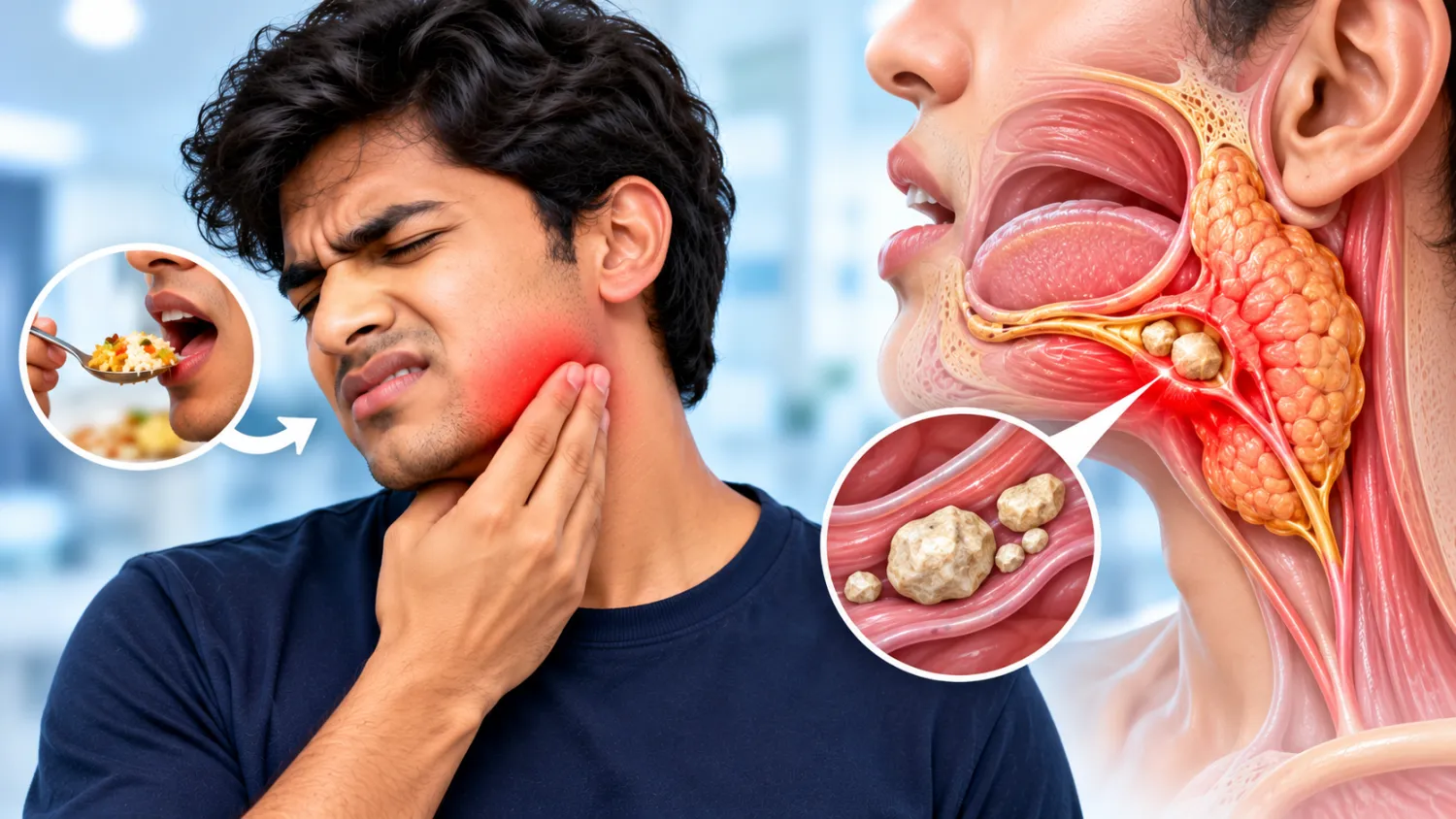
The first few bites of lunch bring an uncomfortable ache beneath your jaw. A swelling appears, then gradually settles after the meal. When dinner starts, the same thing happens again.
Pain and swelling linked to meals can indicate a salivary gland stone. Eating increases saliva production, but a stone may prevent it from draining normally. Pressure builds behind the obstruction, making the gland painful.
If you are searching for salivary gland stone treatment Bangalore, understanding this pattern can help you explain your symptoms and seek appropriate care.
What Are Salivary Gland Stones?
These stones are hardened mineral deposits that develop in a salivary gland or its drainage channel. Doctors call the condition sialolithiasis.
Salivary glands make the fluid that moistens your mouth and helps you chew and swallow. Small channels, called ducts, carry this fluid into the mouth.
Stones commonly affect the glands beneath the jaw. They are different from tonsil stones and cannot always be seen inside the mouth.
Why Does Eating Trigger Pain?
When you eat, your glands release more saliva. Normally, it flows freely into your mouth.
A blocked salivary duct restricts that flow. The gland continues producing fluid, causing pressure and swelling behind the obstruction.
The discomfort may ease between meals as pressure reduces. However, temporary improvement does not prove that the stone has passed.
Swelling Under Jaw While Eating: An Important Clue
Repeated swelling on the same side during meals suggests a drainage problem. Tell your doctor whether it starts with the first few bites, how long it lasts, and whether it disappears completely.
This pattern helps guide assessment, but does not confirm a stone by itself.
Salivary Gland Stone Symptoms to Notice
Possible symptoms include:
- Pain or tenderness beneath the jaw.
- A lump or discomfort under the tongue.
- Swelling that repeatedly returns.
- Difficulty opening the mouth or swallowing.
- An unpleasant taste.
Some small stones cause little discomfort. Others produce intense pain during meals.
For people considering salivary gland stone treatment Bangalore, recurring episodes are worth checking even when the swelling settles afterwards.
Dry Mouth and Swelling
These symptoms can occur together when saliva production or drainage is affected. However, mouth dryness also has other causes, including medicines and dehydration.
Bring your medication list to the consultation. Do not stop prescribed medicines without advice.
What Causes Stones to Form?
The exact cause is not always clear. Reduced saliva flow and dehydration may contribute, and some people develop stones without an obvious explanation.
A stone in submandibular gland tissue or its duct can interfere with drainage beneath the jaw.
The important question is whether the obstruction is causing repeated symptoms, infection or difficulty eating—not simply why the deposit formed.
When Can a Salivary Gland Infection Develop?
Saliva trapped behind an obstruction can allow infection to develop. Warning signs include fever, increasing tenderness, redness, pus in the mouth or a bad taste.
Seek prompt medical assessment for these symptoms, particularly if swelling is worsening.
Difficulty breathing requires emergency care. Infection can occasionally spread into deeper neck tissues, so rapidly increasing swelling or inability to swallow fluids also needs urgent attention.
How Does an ENT Doctor Diagnose the Problem?
Examination and Symptom History
The doctor examines your mouth, feels the affected area and checks the duct opening. They ask about meals, previous episodes, medicines and signs of infection.
A visible stone may provide an explanation, but deeper stones need further assessment.
Ultrasound or Other Imaging
Ultrasound or a CT scan may help locate the stone and distinguish it from other causes of swelling.
Stone size and position matter because they influence treatment. A persistent lump that does not fluctuate with meals also needs examination rather than being assumed to be a stone.
What Treatment Options Are Available?
For salivary gland stone treatment Bangalore patients need a plan based on the stone’s location, symptoms and any infection.
Supportive Measures
Small stones sometimes pass without a procedure. A clinician may recommend hydration, warm compresses, gentle massage or sugar-free gum to encourage saliva flow.
Never use a needle or another sharp object to remove a stone. This can injure the duct and cause infection.
Medicines
Antibiotics may be prescribed for bacterial infection. They treat the infection but do not remove the obstruction.
Persistent or recurring symptoms need review even if medicines temporarily ease discomfort.
Sialendoscopy Procedure
This uses a miniature camera and small instruments to examine the duct and remove suitable stones.
It can preserve the gland, but suitability depends on stone size, location and accessibility. Active infection may need treatment first.
Other Surgical Approaches
Larger or difficult-to-reach stones may require removal through an incision or a combined approach. Removing the whole gland is reserved for selected cases.
Ask your specialist which approach is appropriate and why.
Conclusion
Meal-related swelling is a useful clue, but examination is needed to identify the cause. Repeated episodes deserve attention, and fever or worsening swelling should prompt earlier care.
For salivary gland stone treatment Bangalore residents can book an ENT consultation at DHEE Hospitals. If you are searching for an ENT surgeon Kanakapura Road, contact the hospital near Doddakallasandra Metro Station for assessment and an individual treatment plan.
Frequently Asked Questions
Why does swelling settle after meals?
Pressure may reduce when saliva production slows, even if the obstruction remains.
Can a stone pass naturally?
Yes. Some small stones pass without a procedure.
Can I remove it myself?
Do not dig it out or use sharp instruments.
Will antibiotics remove the stone?
No. They may treat infection, but not the stone itself.
Does everyone need gland removal?
No. Many stones can be managed while preserving the gland.
Can stones return after treatment?
Yes. Returning symptoms need reassessment.
Is every lump beneath the jaw a stone?
No. Other conditions can cause swelling and require examination.
When is emergency care necessary?
Seek emergency help for breathing difficulty or rapidly worsening swelling affecting swallowing.





 WhatsApp Us