 9900550134
 info@dheehospitals.com


 Trauma and Orthopaedics
 Pediatrics
 Gastroenterology
 Obstetrics and Gynecology
 Neurosurgery and Neurology
 Family Medicine
 Cardiology
 General Medicine
 Oncology and Immunology
 Oncology
 Nephrology
 Nutrition and Dietetics
 Adult Intensive Care
Published on :Oct 26, 2026
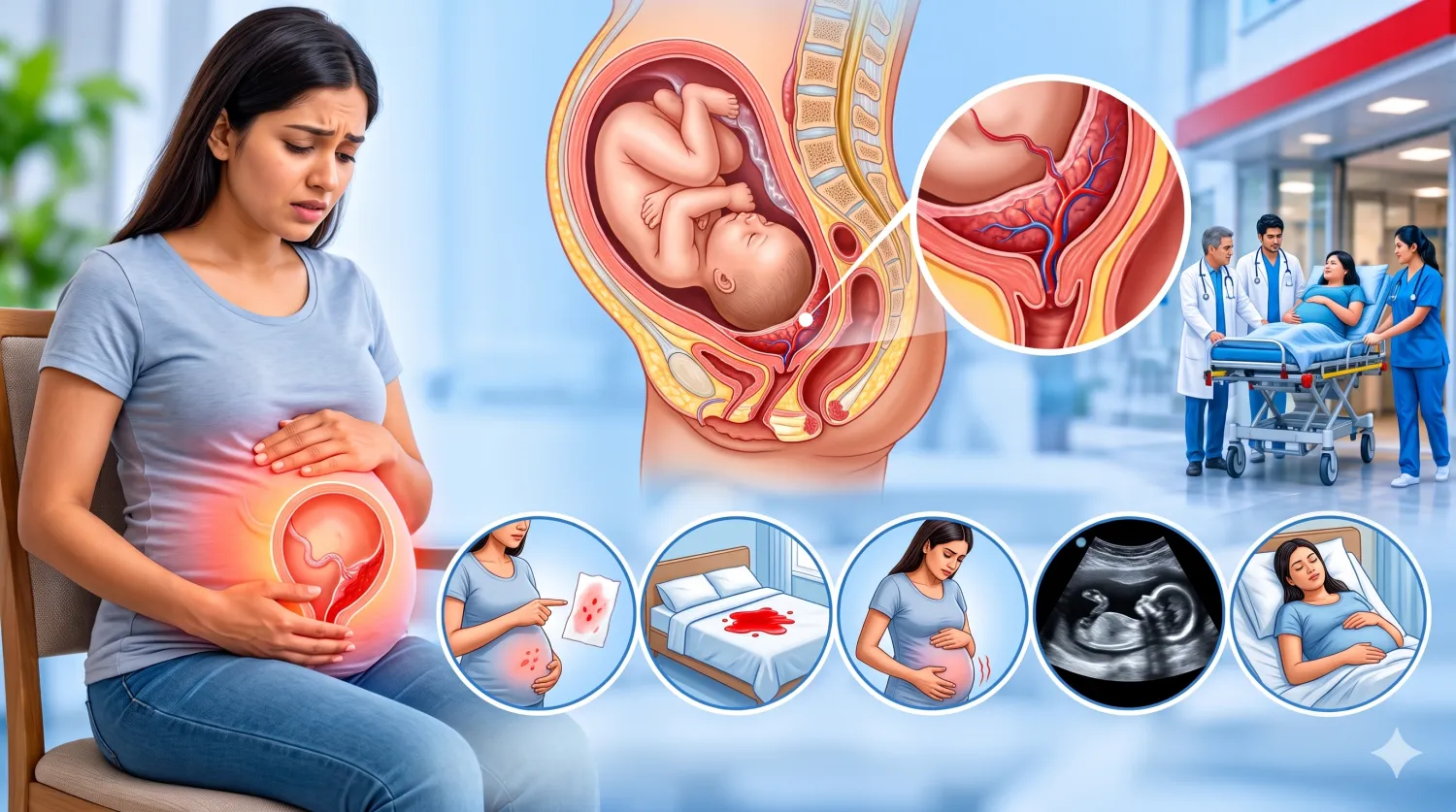
Noticing blood during pregnancy can be frightening, especially when there is no pain to explain it. You may wonder whether a small amount is harmless or whether you should wait to see if it stops.
Bleeding during pregnancy needs prompt medical advice, even without pain. In the second half of pregnancy, one possible cause is placenta previa, where the placenta covers the opening of the cervix.
If you are searching for placenta previa treatment Bangalore, active bleeding should prompt immediate maternity assessment rather than a routine appointment.
What Is Placenta Previa?
The placenta supplies your baby with oxygen and nutrients. It attaches to the wall of the uterus and normally sits clear of the cervix—the opening through which the baby passes during vaginal birth.
Placenta previa means placental tissue covers this opening. Its position can increase bleeding risk and affect how the baby is delivered.
How Does a Low-Lying Placenta Differ?
This term generally describes a placental edge less than 20 mm from the cervical opening without covering it.
The distinction matters. A placenta close to the opening and one covering it may require different monitoring and delivery decisions.
Ask your doctor to explain your scan findings rather than relying on the word “low” alone.
Placenta Previa Symptoms: What Should You Notice?
The main warning sign is vaginal bleeding, often bright red and usually without pain, after 20 weeks.
Bleeding may stop and return later. It can occur after sex or without an obvious trigger. Some women have no bleeding before the condition is discovered on ultrasound.
Although painless bleeding in pregnancy can suggest a placental problem, it does not confirm the diagnosis. Other causes also need consideration.
Why Can Bleeding Happen Without Pain?
As the lower uterus stretches and the cervix changes, the attachment between placental tissue and the uterus can be disturbed, allowing bleeding.
Pain is not a reliable measure of blood loss or seriousness. A woman can feel comfortable while experiencing significant bleeding.
Do not wait for cramps before seeking help, and do not assume that bleeding has become harmless because it has stopped.
When Is It a Pregnancy Bleeding Emergency?
Contact your maternity team immediately about bleeding, particularly if a scan has already identified an abnormal placental position.
Seek emergency help for:
- Heavy bleeding or rapidly soaking a pad.
- Dizziness, fainting or marked weakness.
- Severe abdominal pain.
- Bleeding with reduced baby movements.
If you feel faint or are bleeding heavily, call an ambulance rather than driving yourself.
When seeking placenta previa treatment Bangalore, choose the nearest appropriate emergency service during an active emergency. Do not delay care to reach a preferred doctor.
Who Is More Likely to Develop It?
The exact cause is not always known. Factors associated with a higher likelihood include:
- Previous caesarean birth or uterine surgery.
- Placenta previa in an earlier pregnancy.
- Fertility treatment.
- Multiple pregnancy.
- Smoking.
These factors do not establish a diagnosis. Women without them can also develop the condition.
A previous caesarean is especially important to mention because the team may also assess for abnormal attachment of the placenta to the uterine wall.
Placenta Previa Ultrasound: How Is It Diagnosed?
Placental position is assessed during the mid-pregnancy scan. If its relationship to the cervix needs clarification, a transvaginal scan may be recommended.
This scan is considered safe for mother and baby when performed appropriately. It provides a clearer view of the placental edge and cervical opening.
Will the Position Change?
Many placentas identified as close to the cervix at the mid-pregnancy scan are clear of it later as the uterus grows.
The placenta does not detach and travel elsewhere. Its relationship to the cervix changes with uterine growth.
Follow-up scans establish whether the concern remains. No exercise or home remedy can deliberately move the placenta.
What Does Treatment Involve?
For placenta previa treatment Bangalore patients need an individual plan based on bleeding, pregnancy stage, scan findings and maternal and fetal wellbeing.
Monitoring and Preparation
Care may include repeat scans, haemoglobin checks and treatment for anaemia. Hospital admission depends on symptoms, previous bleeding and access to emergency help.
Ask your team for written instructions about whom to contact and where to go.
Managing Bleeding
Hospital assessment may involve checking vital signs, blood tests and monitoring the baby. Significant blood loss may require fluids, transfusion or urgent delivery.
Steroid injections may be recommended if early birth is likely, to support the baby’s lung maturation.
Activity and Sex
Ask for personalised advice about intercourse, exercise, work and travel. Restrictions depend on your circumstances.
Do not prescribe strict bed rest for yourself or treat rest as protection against future bleeding.
Planning Delivery With Placenta Previa
If placental tissue continues to cover the cervical opening, a caesarean birth is generally required.
Timing depends on bleeding history, pregnancy progress and other clinical findings. Heavy or recurrent bleeding may bring delivery forward.
Birth should be planned where major bleeding can be managed and appropriate newborn support is available.
Conclusion
Bleeding without pain still deserves prompt attention. Scan follow-up and a clear emergency plan help guide safer care.
DHEE Hospitals provides multidisciplinary maternity services for women seeking a high-risk pregnancy specialist Bangalore.
For placenta previa treatment Bangalore, book an antenatal review at DHEE Hospitals. If you need maternity emergency Kanakapura Road services because bleeding has started, seek immediate assessment rather than waiting for that appointment.
Frequently Asked Questions
Can the condition occur without bleeding?
Yes. It may first be identified on a routine scan.
Is painless bleeding harmless?
No. The absence of pain does not establish safety.
Should I report bleeding that stops?
Yes. Report it promptly to your maternity team.
Is an internal ultrasound safe?
Yes, when performed appropriately to assess placental position.
Can exercises move the placenta?
No. Position changes depend on uterine growth.
Will everyone need admission?
No. Admission depends on individual risks and symptoms.
Is vaginal delivery always ruled out?
Persistent coverage generally requires caesarean birth; other positions need individual assessment.
Can bleeding require early birth?
Yes. Significant bleeding may require delivery earlier than planned.





 WhatsApp Us