 9900550134
 info@dheehospitals.com


 Trauma and Orthopaedics
 Pediatrics
 Gastroenterology
 Obstetrics and Gynecology
 Neurosurgery and Neurology
 Family Medicine
 Cardiology
 General Medicine
 Oncology and Immunology
 Oncology
 Nephrology
 Nutrition and Dietetics
 Adult Intensive Care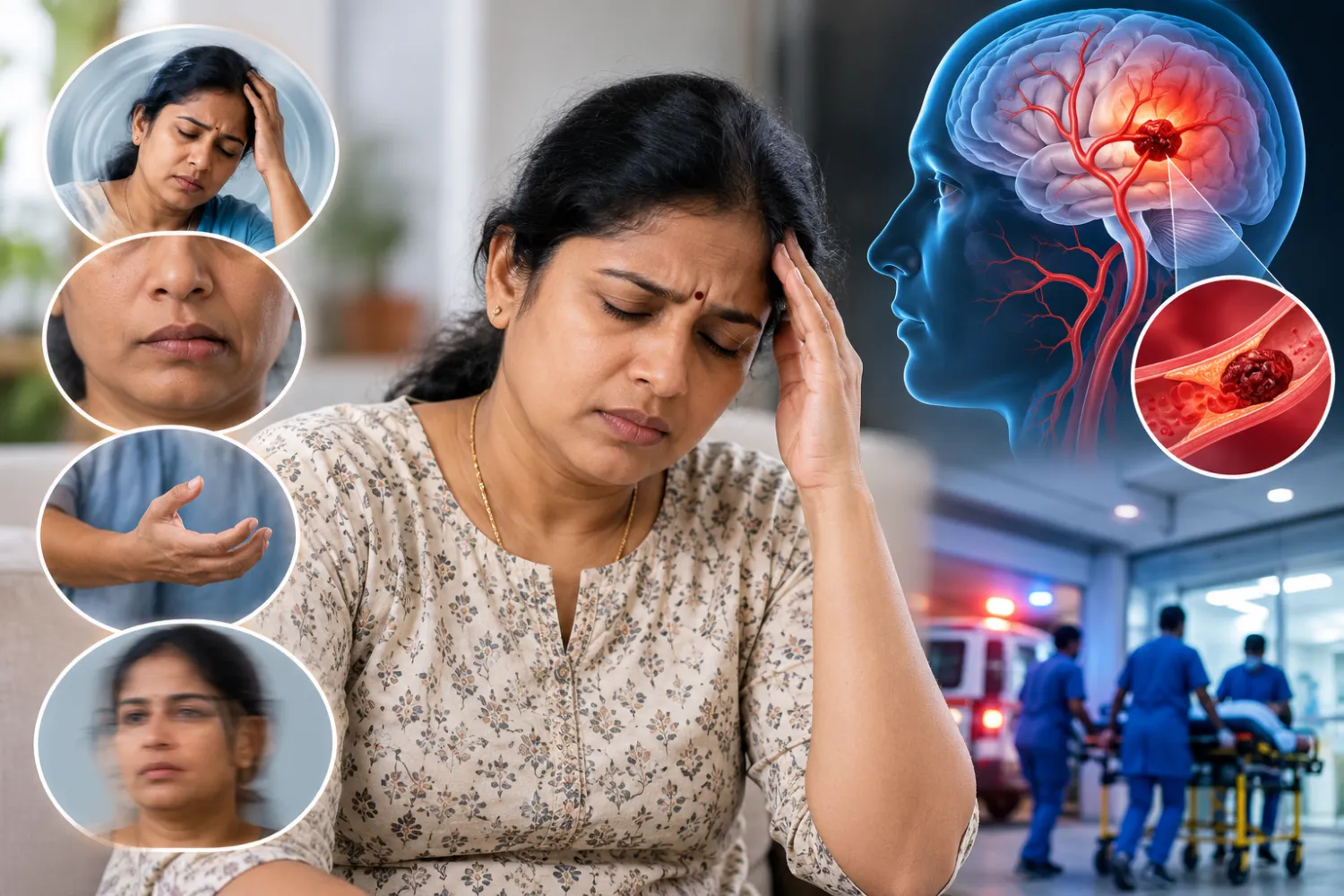
Published on :Oct 5, 2026
A weak arm that feels normal again after ten minutes. Speech that suddenly becomes unclear and then returns. Temporary loss of vision that disappears before reaching a hospital. These episodes are easy to dismiss, but they may be warning signs of a transient ischaemic attack, or TIA.
A TIA happens when blood flow to part of the brain is briefly interrupted. Symptoms may last only a few minutes or hours, but a TIA is still a medical emergency. About one in three people who experience a TIA may eventually have a stroke.
What Are the Common Mini Stroke Symptoms?
The main mini stroke symptoms begin suddenly and resemble those of a full stroke. They may include:
- Drooping or numbness on one side of the face
- Temporary weakness on one side of the body
- Numbness in one arm or leg
- Sudden slurred speech
- Difficulty understanding speech
- Temporary blurred, double or lost vision
- Sudden loss of balance
- Poor coordination
- Difficulty swallowing
The symptoms usually affect a specific function rather than causing a general feeling of illness. A person may drop an object, struggle to form words or notice that one side of their smile has changed.
Use BE FAST to Recognise a TIA
The BE FAST method helps people remember important transient ischemic attack symptoms:
- B – Balance: Is there sudden dizziness or loss of coordination?
- E – Eyes: Has vision suddenly become blurred, double or lost?
- F – Face: Does one side of the face droop?
- A – Arms: Is one arm weak, numb or drifting down?
- S – Speech: Is speech slurred or difficult to understand?
- T – Time: Call emergency services immediately.
TIA vs Stroke: What Is the Difference?
The practical difference in TIA vs stroke is not something a person can safely determine at home.
A TIA causes temporary neurological symptoms without lasting brain-tissue injury. In an ischaemic stroke, the blockage continues and damages brain tissue. A bleeding stroke occurs when a blood vessel in the brain ruptures.
All three can begin with the same warning signs. Even if symptoms disappear, doctors must first treat the episode as a possible stroke. Quick hospital assessment protects the brain and creates an opportunity to prevent another event.
Why Is a TIA an Emergency?
The stroke risk after TIA is highest during the first days and weeks following the episode. A TIA can signal a narrowed artery, a blood clot from the heart or another condition capable of interrupting blood flow again.
- Symptoms lasted only a few minutes
- Only one symptom occurred
- This has happened before
- The person has no known stroke risk factors
- The symptoms have completely resolved
How Is a Mini Stroke Diagnosed?
A mini stroke diagnosis begins with a detailed account of what happened. Because symptoms may be gone by the time the patient arrives, the doctor may ask the patient or witness:
- Which symptoms appeared
- What time they started
- How long they lasted
- Which side of the body was affected
- Whether similar episodes occurred earlier
The assessment may include blood pressure measurement, neurological examination, blood tests and an electrocardiogram. Further tests can look for diabetes, high cholesterol, an irregular heartbeat or narrowing of the neck arteries.
Is a Brain Scan After TIA Necessary?
A brain scan after TIA may be recommended to look for signs of a small stroke, bleeding or another explanation for the symptoms.
MRI can detect subtle brain changes, while CT is useful in selected situations. A carotid ultrasound may examine the arteries carrying blood to the brain. Heart monitoring and an echocardiogram may be used when a clot from the heart is suspected.
A normal scan does not automatically prove that nothing happened. Doctors consider the symptom history, examination and complete test results together.
TIA Treatment and Stroke Prevention
The purpose of treatment is to prevent a full stroke. TIA treatment in Bangalore or any other location should begin with urgent specialist evaluation.
Treatment depends on the cause and may include:
- Antiplatelet medicine
- Anticoagulant medicine for certain heart-rhythm problems
- Blood-pressure treatment
- Cholesterol-lowering medicine
- Diabetes management
- Treatment for severe carotid-artery narrowing
- Support to stop smoking
Do not start aspirin or another blood-thinning medicine without emergency medical advice. Similar symptoms can occasionally result from bleeding in the brain, and the correct treatment depends on the diagnosis.
Conclusion
A TIA may be brief, but its warning should be taken seriously. Sudden facial drooping, arm weakness, speech difficulty or vision loss requires emergency care even when it disappears. For urgent assessment and follow-up, contact DHEE Hospitals or consult a neurologist near Kanakapura Road without delay.
Frequently Asked Questions
1. How long do TIA symptoms last?
Symptoms often last minutes and usually resolve within hours. Their short duration does not make the episode safe.
2. Can stress cause symptoms similar to a TIA?
Stress can produce physical symptoms, but sudden weakness, speech difficulty or vision loss must first be treated as a medical emergency.
3. Can a TIA happen during sleep?
Yes. A person may wake with weakness, numbness, speech difficulty or altered vision and should seek emergency care.
4. Does a normal brain scan rule out a TIA?
No. Some TIAs leave no visible injury. Diagnosis also depends on the symptom history, examination and other tests.
5. Can young adults have a TIA?
Yes. TIA is more common with increasing age, but younger adults can also be affected.
6. Is a TIA painful?
Usually not. Most symptoms involve sudden loss of strength, sensation, speech, balance or vision rather than pain.
7. Can a person have more than one TIA?
Yes. Repeated episodes may occur, and each one requires urgent medical assessment.
8. Can a stroke be prevented after a TIA?
Risk can often be reduced by identifying the cause and promptly treating blood pressure, cholesterol, heart rhythm or narrowed arteries.





 WhatsApp Us