 9900550134
 info@dheehospitals.com


 Trauma and Orthopaedics
 Pediatrics
 Gastroenterology
 Obstetrics and Gynecology
 Neurosurgery and Neurology
 Family Medicine
 Cardiology
 General Medicine
 Oncology and Immunology
 Oncology
 Nephrology
 Nutrition and Dietetics
 Adult Intensive Care
Published on :Oct 5, 2026
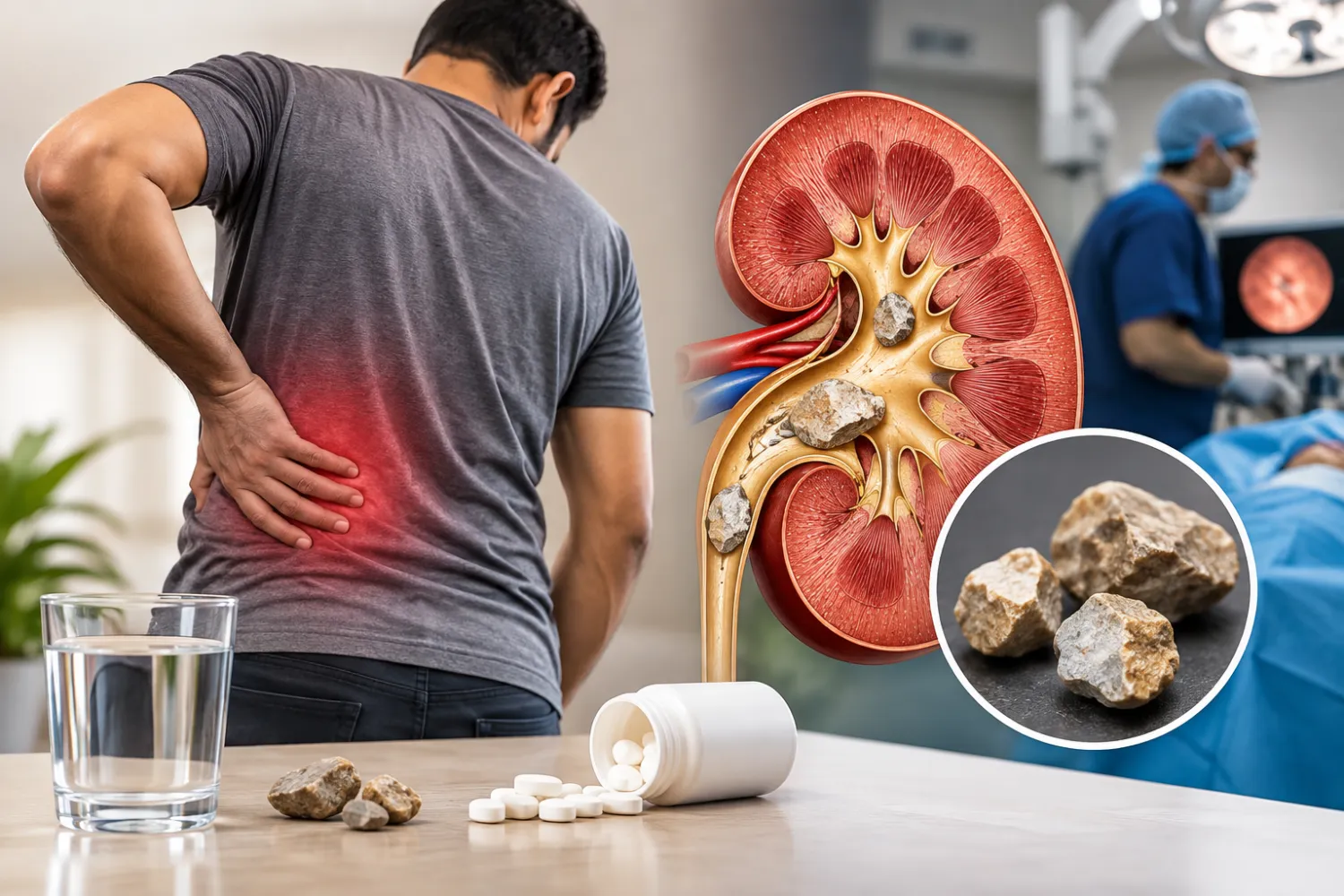
Kidney stone pain can begin without warning. One moment you feel fine; the next, there may be intense pain in your side or lower back. Although some stones pass naturally, others block urine flow and require urgent treatment.
Kidney stones are hard deposits formed when minerals and salts in urine become concentrated. They are increasingly common: about 11% of men and 6% of women in the United States experience one at least once. Knowing the symptoms and seeking timely medical help can prevent infection, kidney damage and recurring pain.
What Are Kidney Stones?
Kidney stones may be as small as a grain of sand or grow much larger. The most common are calcium stones. Other types include uric acid, struvite and cystine stones.
Low fluid intake is a common risk factor. A high-salt diet, obesity, family history, digestive conditions, repeated urinary infections and certain medicines may also increase the risk.
Common Kidney Stone Symptoms
A small stone inside the kidney may cause no discomfort. Symptoms often begin when it moves into the ureter, the narrow tube connecting the kidney to the bladder.
Common kidney stone symptoms include:
- Sudden, severe pain in the side or back
- Pain spreading towards the lower abdomen or groin
- Pain that rises and falls in waves
- Blood in the urine
- Burning or pain while urinating
- Frequent urge to urinate
- Nausea or vomiting
- Cloudy or foul-smelling urine
Where Is Kidney Stone Pain Felt?
The exact kidney stone pain location can change as the stone moves. It commonly begins below the ribs on one side of the back. The pain may then travel towards the abdomen, groin or genital area.
Pain alone does not reveal the stone’s size. Even a small stone can cause severe discomfort while passing through the ureter.
When Is a Kidney Stone an Emergency?
Seek urgent medical care if the pain occurs with:
- Fever or chills
- Difficulty or inability to urinate
- Persistent vomiting
- Severe weakness or confusion
- Blood in the urine
- Pain that cannot be controlled
A blocked urinary tract combined with infection is a medical emergency. It may require immediate drainage and antibiotics rather than waiting for the stone to pass.
How Are Kidney Stones Diagnosed?
The doctor will review the symptoms, examine the patient and may recommend:
- Urine tests to detect blood or infection
- Blood tests to check kidney function
- Ultrasound to identify stones or urinary blockage
- Non-contrast CT scan to determine the stone’s size and location
- Stone analysis after a passed or removed stone
These findings help the urologist choose a suitable treatment instead of relying on pain severity alone.
Kidney Stone Treatment Options
The right treatment depends on the stone’s size, position, composition, symptoms and whether infection or blockage is present.
Medicines and Observation
Small stones may pass naturally. Treatment can include pain relief, anti-nausea medicine and, in selected cases, medication that relaxes the ureter. Patients are normally advised to drink adequate water unless a doctor has restricted their fluid intake.
Follow-up imaging is important because reduced pain does not always mean that the stone has passed.
Lithotripsy for Kidney Stones
Shock wave lithotripsy uses energy waves from outside the body to break a suitable stone into smaller fragments. These pieces can then leave the body through urine.
Lithotripsy for kidney stones may be considered according to the stone’s size, location and density. Some patients need more than one session, and the procedure may not suit every type of stone.
Ureteroscopy and Laser Treatment
During a ureteroscopy procedure, a thin telescope is passed through the urinary passage and bladder into the ureter or kidney. No external incision is usually required.
The surgeon may remove the stone directly or fragment it with a laser. Laser kidney stone removal is commonly considered for ureteric stones and kidney stones that are unlikely to pass or have not responded to other treatment. A temporary ureteric stent may be placed to support urine drainage.
Percutaneous Nephrolithotomy
Percutaneous nephrolithotomy, or PCNL, is generally used for very large or complex kidney stones. The surgeon reaches the kidney through a small incision in the back and removes the stone using specialised instruments.
Shock wave lithotripsy, ureteroscopy and PCNL are the principal procedures used for stones that cannot pass naturally.
When Is Kidney Stone Surgery Needed?
Kidney stone surgery may be recommended when:
- The stone is too large to pass
- Pain remains severe despite medication
- The stone blocks urine flow
- Infection develops behind the blockage
- Kidney function is affected
- The stone keeps growing
- Observation has not worked
Can Kidney Stones Be Prevented?
Drinking enough water to produce pale urine is an important preventive step. Reducing salt may also help because high sodium intake increases the chance of developing stones.
Do not remove calcium from your diet without medical advice. Prevention should be based on the stone type, blood tests, urine results and personal risk factors.
Conclusion
Kidney stones should not be ignored when pain is severe, urination becomes difficult or fever develops. Early evaluation can identify the stone and prevent complications. For personalised kidney stone treatment Bangalore, consult DHEE Hospitals or book an appointment with a qualified urologist near Kanakapura Road.
Frequently Asked Questions
1. Can kidney stones pass without treatment?
Small stones can sometimes pass naturally with medicines, suitable fluid intake and monitoring. Larger stones or those causing blockage may require a procedure.
2. How long does a kidney stone take to pass?
It may take a few days or several weeks. The time depends mainly on the stone’s size and location.
3. What does kidney stone pain feel like?
It is often sharp, intense and wave-like. The pain may move from the side or back towards the groin.
4. Is laser kidney stone removal painful?
The procedure is performed under anaesthesia. Temporary burning, discomfort or blood in the urine may occur during recovery.
5. Can kidney stones damage the kidney?
An untreated obstruction, especially with infection, can harm kidney function. Timely medical care reduces this risk.
6. Does every kidney stone treatment Bangalore require surgery?
No. Many small stones can be managed without surgery. Imaging and symptoms determine whether intervention is necessary.
7. Which test is best for detecting kidney stones?
A non-contrast CT scan provides detailed information, while ultrasound is often used when radiation exposure needs to be avoided.
8. Can kidney stones return after treatment?
Yes. Stones can recur. Adequate hydration, dietary changes and metabolic evaluation can help reduce future risk.





 WhatsApp Us