 9900550134
 info@dheehospitals.com


 Trauma and Orthopaedics
 Pediatrics
 Gastroenterology
 Obstetrics and Gynecology
 Neurosurgery and Neurology
 Family Medicine
 Cardiology
 General Medicine
 Oncology and Immunology
 Oncology
 Nephrology
 Nutrition and Dietetics
 Adult Intensive Care
Published on :Oct 5, 2026
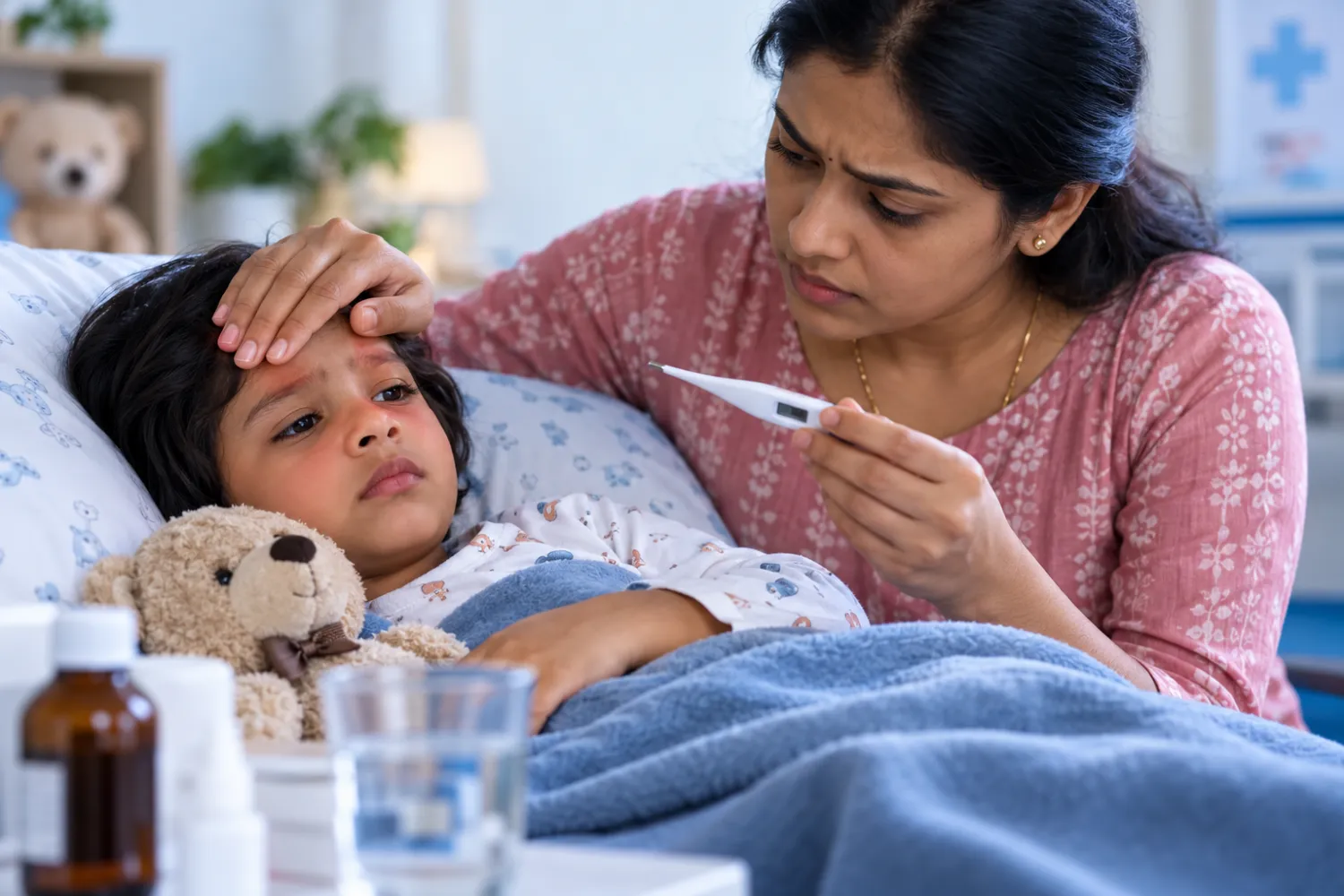
A fever is usually the body’s natural response to an infection. Most childhood fevers improve with rest, fluids and appropriate medical advice. However, the temperature shown on the thermometer is only one part of the picture. A child’s age, breathing, alertness, fluid intake and accompanying symptoms are equally important.
A temperature of 38°C (100.4°F) or higher is generally considered a fever. Parents should know when a child’s fever is dangerous, especially because babies and young children can become seriously unwell quickly.
What Causes High Fever in Children?
Common causes of high fever in children include:
- Viral infections such as influenza
- Ear, throat or chest infections
- Urinary tract infections
- Dengue and other mosquito-borne infections
- Gastrointestinal infections
- Pneumonia
- Occasionally, serious bacterial infections such as meningitis or sepsis
Teething may cause mild discomfort or a slight rise in temperature, but it does not usually explain a high fever. Do not assume that a high temperature is caused only by teething.
When Does a Child’s Temperature Need Medical Attention?
Age makes an important difference.
Babies Under Three Months
A baby younger than three months with a temperature of 38°C or higher needs prompt medical assessment, even if the baby appears comfortable.
Babies Between Three and Six Months
Seek medical advice promptly when a baby in this age group has a temperature of 39°C or higher, appears unusually sleepy, feeds poorly or behaves differently.
Children Older Than Six Months
The number alone does not always indicate how serious the illness is. Pay close attention to the child’s breathing, activity, hydration, skin colour and response to you.
Emergency Warning Signs Parents Should Never Ignore
Take your child to an emergency department immediately if fever occurs with:
- Difficulty breathing, grunting or very fast breathing
- Blue, grey, pale or blotchy lips or skin
- Extreme drowsiness or difficulty waking
- Confusion, unusual irritability or weak crying
- A stiff neck or discomfort from bright light
- A rash that does not fade when pressed
- Repeated vomiting
- Severe headache
- Inability to drink or breastfeed
- Very little or no urine
- A seizure
- Loss of consciousness
These symptoms may indicate a serious infection or another condition requiring pediatric emergency care. A child who seems to be getting worse should be assessed even if the temperature is not extremely high.
Dehydration Signs in Children
Fever increases fluid loss, particularly when accompanied by vomiting or diarrhoea. Important dehydration signs in children include:
- Dry mouth or cracked lips
- No tears while crying
- Sunken eyes
- Fewer wet nappies or less frequent urination
- Dark urine
- Poor feeding
- Unusual tiredness or weakness
Offer breast milk frequently to babies. Older children can take small, regular sips of water or an oral rehydration solution. A child who is too weak, sleepy or breathless to drink needs urgent care.
Fever With Seizures in Children
A febrile seizure can cause stiffening, jerking movements, loss of awareness or rolling of the eyes. It most commonly affects children between six months and five years. Around 2% to 5% of children in this age group experience a febrile seizure. (cdc.gov)
If a seizure occurs:
- Place the child on their side on a safe surface
- Move hard or sharp objects away
- Note when the seizure started
- Do not restrain the child
- Do not place anything in the child’s mouth
- Do not give food, water or medicine during the seizure
Seek emergency assistance for a first seizure, breathing difficulty, repeated seizures or a seizure lasting more than five minutes. Most febrile seizures are brief, but every first episode requires medical evaluation. (nhs.uk)
How to Manage Fever Safely at Home
If the child is alert, drinking and breathing normally:
- Encourage regular fluids
- Dress the child in light, comfortable clothing
- Allow adequate rest
- Check the temperature with a digital thermometer
- Give fever medicine only in the correct weight-based dose recommended by a doctor
Do not give aspirin to a child. Avoid cold-water baths, ice packs or alcohol rubs. Do not alternate fever medicines unless a doctor has specifically advised it.
Fever medicine may improve comfort, but it does not treat the underlying infection. Antibiotics are only helpful for certain bacterial infections and should not be used without a prescription.
When Does Persistent Fever in a Child Need Evaluation?
A persistent fever in a child should be medically evaluated when it lasts five days or longer. Seek help earlier if symptoms are worsening, the child has an existing medical condition or you are concerned about their behaviour.
The doctor may examine the ears, throat, chest and abdomen. Depending on the symptoms, blood tests, urine tests, dengue testing or chest imaging may be advised.
Conclusion
Most fevers settle safely, but breathing difficulty, dehydration, unusual sleepiness, a non-fading rash or seizure should never be ignored. If your child develops worrying symptoms, contact DHEE Hospitals for child fever treatment in Bangalore or visit a suitable 24/7 pediatric emergency in Bangalore without delay.
Frequently Asked Questions
1. What temperature is considered a fever in children?
A temperature of 38°C or higher is generally considered a fever. The child’s age and overall condition determine how urgently it should be assessed.
2. When is child fever dangerous?
Fever is concerning when accompanied by breathing difficulty, severe drowsiness, dehydration, a non-fading rash, stiff neck, seizure or poor responsiveness.
3. Should a baby with fever be taken to a hospital?
A baby younger than three months with a temperature of 38°C or higher should receive prompt medical assessment.
4. Can fever cause seizures?
Yes. Some children between six months and five years can develop febrile seizures during a fever.
5. What should I do during a febrile seizure?
Place the child on their side, keep the area safe and time the seizure. Do not hold them down or put anything in their mouth.
6. Should I give antibiotics for high fever?
No. Antibiotics only treat bacterial infections and should be given when prescribed after medical evaluation.
7. How can I prevent dehydration during fever?
Offer frequent breastfeeds or small amounts of fluid. Oral rehydration solution may be useful when vomiting or diarrhoea is present.
8. Can a child have a serious illness with a mild fever?
Yes. Temperature alone cannot measure illness severity. Breathing, alertness, skin colour, hydration and behaviour are important warning indicators.





 WhatsApp Us