 9900550134
 info@dheehospitals.com


 Trauma and Orthopaedics
 Pediatrics
 Gastroenterology
 Obstetrics and Gynecology
 Neurosurgery and Neurology
 Family Medicine
 Cardiology
 General Medicine
 Oncology and Immunology
 Oncology
 Nephrology
 Nutrition and Dietetics
 Adult Intensive Care
Published on :Oct 26, 2026
Repeated diarrhoea, stomach cramps and urgent toilet trips can disrupt everyday life. When symptoms keep returning, it is easy to blame food or assume you have a sensitive stomach.
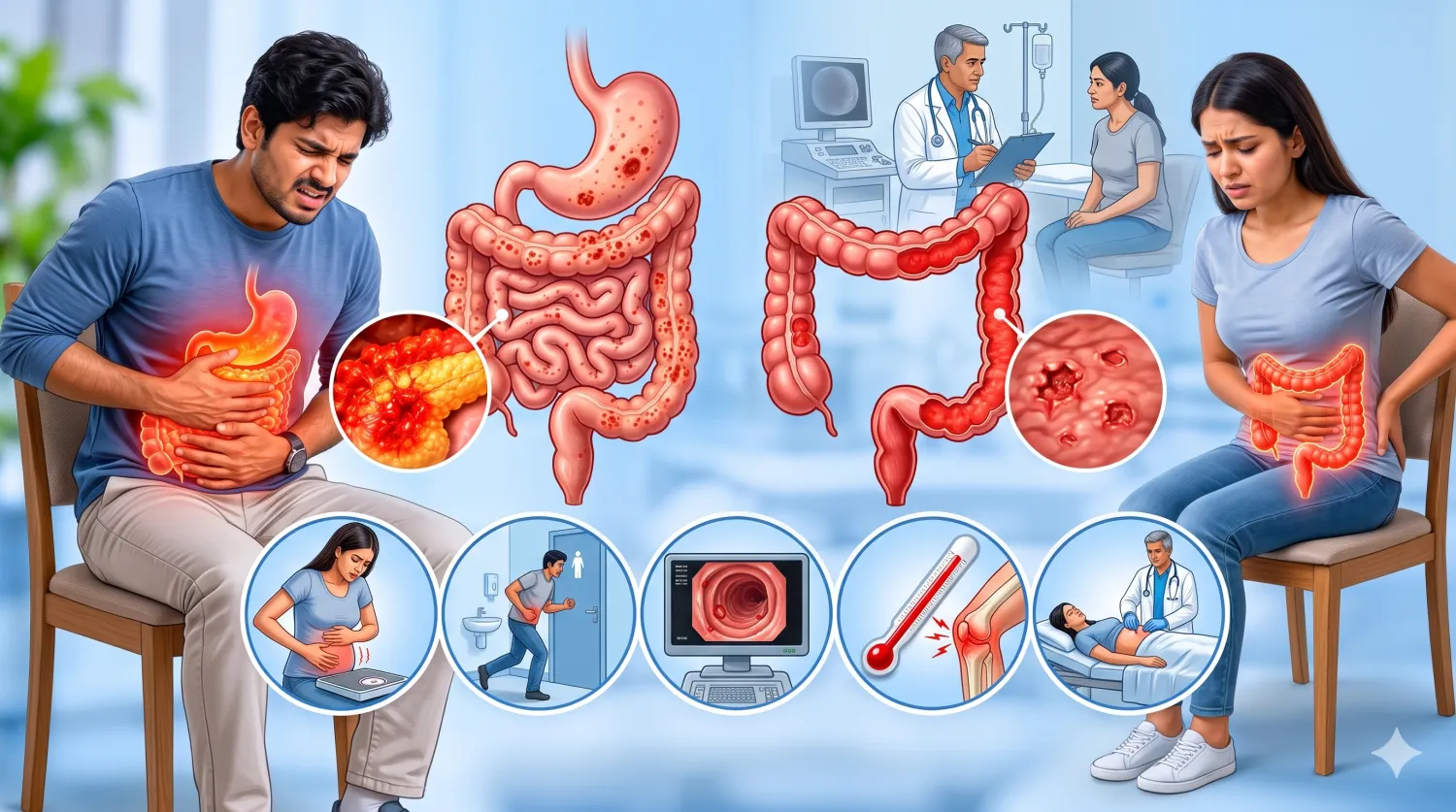
Crohn’s disease and ulcerative colitis are the two main forms of inflammatory bowel disease, or IBD. Both cause ongoing inflammation, but they affect the digestive tract differently and may require different treatment.
If you are searching for inflammatory bowel disease treatment Bangalore, a clear diagnosis is the starting point, not simply medicines to stop diarrhoea.
What Is Inflammatory Bowel Disease?
IBD involves chronic inflammation in the digestive tract. Genetics, immune responses and environmental factors contribute, although the exact cause is not fully understood.
Symptoms can worsen during a flare and improve during remission. Remission means the disease is controlled; it does not necessarily mean treatment is no longer needed.
IBD differs from irritable bowel syndrome, or IBS. IBS can cause troublesome bowel symptoms but does not produce the same inflammatory damage.
Crohn’s vs Ulcerative Colitis: The Main Differences
| Feature | Crohn’s disease | Ulcerative colitis |
|---|---|---|
| Location | Can affect anywhere from mouth to anus | Affects the colon and rectum |
| Pattern | Inflamed patches may alternate with healthy areas | Usually continuous, starting at the rectum |
| Depth | May involve the full bowel-wall thickness | Mainly affects the inner lining |
| Complications | Narrowing, abscesses and abnormal connecting tunnels | Severe bleeding and dangerous colon enlargement |
| Surgery | Can treat complications, but disease may recur | Removing the colon and rectum removes the affected bowel |
Symptoms overlap, so these differences cannot be established from a symptom checklist alone.
Crohn’s Disease Symptoms
Common features include diarrhoea, abdominal cramps, fatigue and weight loss. Some people develop mouth ulcers or pain, swelling and drainage around the anus.
Symptoms depend on the affected area. Small-bowel disease may interfere with nutrient absorption, while narrowing can cause obstructive symptoms.
Blood may be present, but its absence does not rule out inflammation.
Ulcerative Colitis Symptoms
Typical features include frequent loose stools, rectal bleeding and urgency. You may feel that you need to pass stool even after using the toilet.
Blood and mucus in stool should be assessed rather than automatically attributed to piles.
Both conditions can also affect areas outside the bowel, including the joints, skin and eyes.
Chronic Diarrhoea Causes: When Should You Seek Help?
Persistent diarrhoea can result from infections, coeliac disease, medicines, IBS or inflammatory conditions.
Arrange assessment when diarrhoea lasts several weeks, repeatedly returns, wakes you at night, or accompanies weight loss, bleeding or unusual tiredness.
For inflammatory bowel disease treatment Bangalore patients should bring details of stool frequency, bleeding, medicines and previous tests. These help the doctor choose appropriate investigations.
How Is IBD Diagnosed?
No single test answers every question. Assessment establishes whether inflammation is present, where it occurs and whether another condition explains it.
Blood and Stool Tests
Blood tests may check for anaemia, inflammation and nutritional deficiencies.
Stool tests help exclude infection. Faecal calprotectin measures a marker associated with intestinal inflammation, but an elevated result does not automatically establish IBD.
Infections and other conditions can also increase it.
Colonoscopy for IBD
A flexible camera examines the colon and, when possible, the end of the small intestine. Small tissue samples, called biopsies, help clarify the diagnosis.
During severe colitis, the team may choose a more limited examination for safety.
Imaging the Small Bowel
MRI or other imaging may be needed when small-bowel involvement or complications are suspected. Your doctor explains which investigation will change management.
IBD Flare Symptoms and Emergency Warning Signs
A flare may involve more frequent stools, bleeding, abdominal pain or worsening fatigue.
Seek urgent assessment for severe pain, heavy bleeding, fever with marked illness, persistent vomiting or dehydration. A swollen abdomen with inability to pass stool or wind also needs immediate attention.
Do not assume that every deterioration is a flare. Infection may resemble one and require different treatment.
What Treatment Options Are Available?
For inflammatory bowel disease treatment Bangalore, the plan depends on the diagnosis, location, severity and complications.
Medicines to Control Inflammation
Aminosalicylates such as mesalazine are commonly used for ulcerative colitis. Steroids may control a flare but are generally unsuitable for long-term maintenance.
Immune-modifying medicines, biologics and targeted treatments may be needed for more significant disease. Their benefits and monitoring requirements should be discussed individually.
When Is Surgery Considered?
Surgery may be needed for obstruction, abscesses, severe disease or symptoms that do not respond adequately to medicines.
It is a treatment option, not evidence that you have failed. Decisions should involve clear discussion of recovery and longer-term care.
Can Diet Replace Medicines?
No single diet cures IBD. Nutrition supports recovery and helps address deficiencies, but it should not replace prescribed treatment.
Keep a food diary if certain meals worsen symptoms. Avoid removing several food groups without advice, particularly when losing weight.
Dietary changes during a flare or bowel narrowing may differ from advice during remission.
Why Follow-Up Still Matters
Continue prescribed maintenance treatment even when feeling well. Follow-up checks disease activity, medicine safety and nutritional health.
Some patients with longstanding colonic inflammation also need surveillance colonoscopies to assess bowel-cancer risk.
Conclusion
These conditions share symptoms but differ in their pattern and complications. Accurate diagnosis and ongoing care help protect bowel health.
For inflammatory bowel disease treatment Bangalore, book a consultation at DHEE Hospitals. If you need a gastroenterologist near Kanakapura Road, its medical gastroenterology team can review your symptoms and recommend an individual assessment and treatment plan.
Frequently Asked Questions
Is IBD the same as IBS?
No. IBD involves inflammation that can damage bowel tissue.
Can either condition cause weight loss?
Yes. Poor intake and disease activity can contribute.
Does bleeding always mean IBD?
No. Several conditions cause bleeding and need assessment.
Can normal blood results exclude IBD?
No. Further testing may still be appropriate.
Is faecal calprotectin diagnostic by itself?
No. It must be interpreted alongside other findings.
Should I stop treatment during remission?
Only according to your specialist’s instructions.
Will everyone need surgery?
No. Many patients are managed with medicines.
Can symptoms return after improvement?
Yes. Report changes promptly and follow your care plan.





 WhatsApp Us