 9900550134
 info@dheehospitals.com


 Trauma and Orthopaedics
 Pediatrics
 Gastroenterology
 Obstetrics and Gynecology
 Neurosurgery and Neurology
 Family Medicine
 Cardiology
 General Medicine
 Oncology and Immunology
 Oncology
 Nephrology
 Nutrition and Dietetics
 Adult Intensive Care
Published on :Oct 26, 2026
Your baby starts with a runny nose and a cough. A few days later, feeds take longer, breathing looks harder and the skin beneath the ribs pulls inward. What seemed like a cold now needs closer attention.
Breathing pauses, blue or grey lips, severe breathing difficulty, or a baby who is floppy and difficult to wake require emergency help. Do not wait for a routine appointment.
If you are searching for bronchiolitis treatment Bangalore, your baby’s breathing, feeding and alertness should guide how urgently you seek care.
What Is Bronchiolitis?
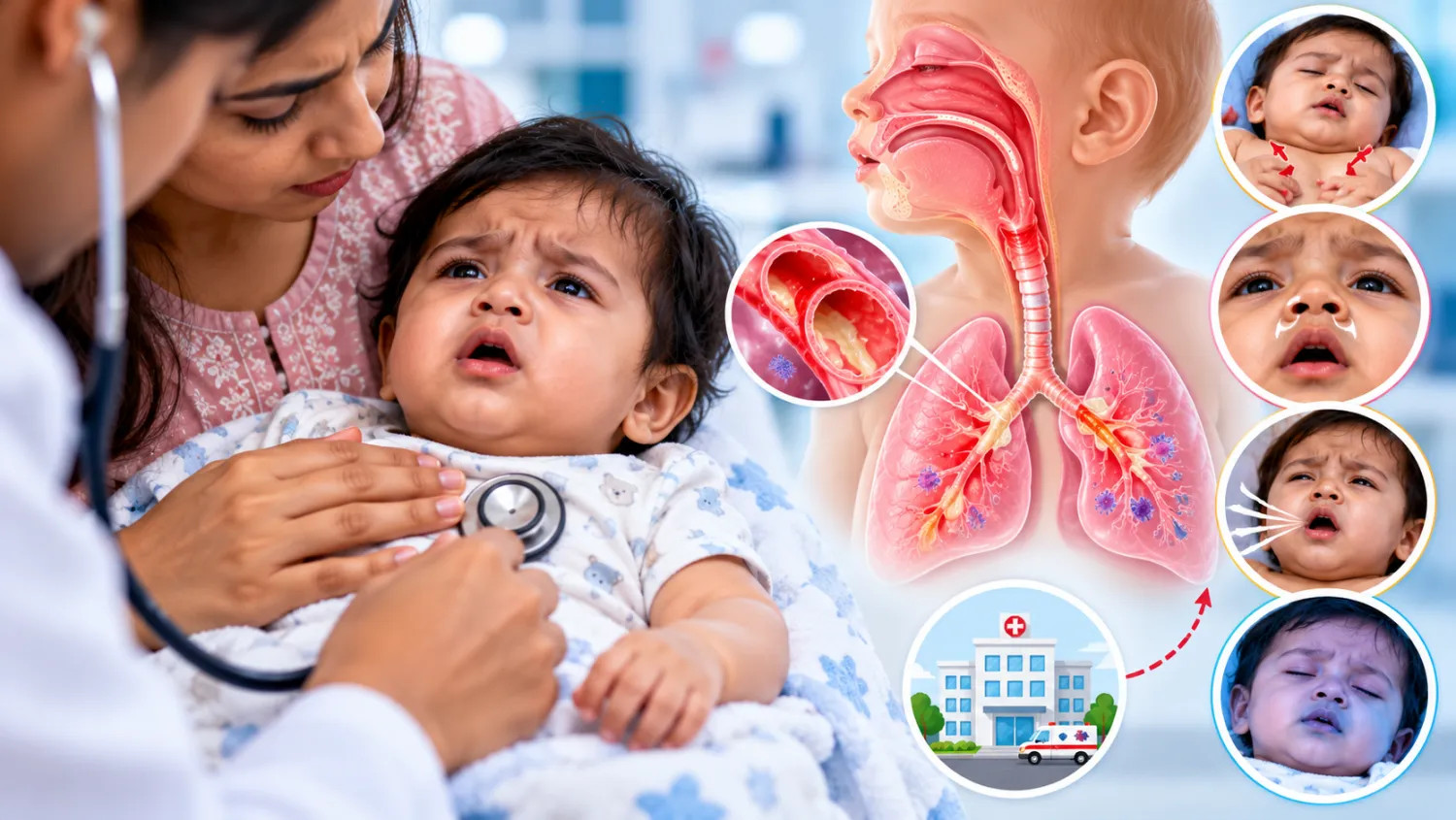
Bronchiolitis is a viral infection affecting the smallest airways in the lungs. These airways become swollen and fill with mucus, making breathing more difficult.
It mainly affects children under two, particularly babies. Most recover with supportive care, but some need hospital treatment.
How Is RSV Involved?
RSV infection in infants is a common cause of bronchiolitis, although other viruses can cause it too.
RSV spreads through respiratory droplets and contaminated hands or surfaces. An adult may have mild cold symptoms while a young baby develops more significant illness.
Bronchiolitis Symptoms in Babies
The illness often begins with:
- A runny or blocked nose.
- A persistent cough.
- Reduced interest in feeds.
- Irritability or tiredness.
- Sometimes a fever.
Faster or more effortful breathing may follow. Symptoms commonly peak around days three to five, so an initially mild illness can worsen.
The absence of fever does not rule out breathing problems.
Baby Breathing Fast: What Should Parents Check?
Watch your baby when calm rather than crying or feeding. Look at the chest and tummy, and notice whether breathing seems unusually rapid or requires extra effort.
You can count breaths for a full minute, but do not delay care while trying to obtain an exact number. Breathing rate alone cannot determine severity.
When seeking bronchiolitis treatment Bangalore, explain what changed and when. “The ribs pull inward with each breath” is more useful than “the cough sounds bad.”
Chest Retractions in Baby
Retractions mean the skin pulls inward between or beneath the ribs, or around the base of the neck, during breathing.
Marked pulling-in, grunting or obvious struggle means the baby is working hard to breathe. These signs need immediate assessment.
Wheezing in Infants
A wheeze is a whistling sound from the airways. It can occur with bronchiolitis, but its loudness does not reliably show how serious the illness is.
A quieter baby who looks exhausted is not necessarily improving.
Feeding Difficulty in Baby: Why It Matters
Babies need to coordinate sucking, swallowing and breathing. Congestion and breathlessness can make this difficult.
Seek urgent advice if feeds become much smaller, your baby repeatedly stops to breathe, or wet nappies decrease.
Taking less than half the usual amount over several feeds is concerning. A dry nappy for 12 hours is another warning sign, but seek help sooner if your baby looks unwell.
Do not force a feed when breathing is severely laboured.
Which Signs Need Emergency Hospital Care?
Call an ambulance or seek emergency care for:
- Pauses in breathing.
- Blue or grey lips, tongue or skin.
- Severe chest pulling-in or grunting.
- Floppiness or difficulty waking.
- Obvious exhaustion with breathing.
Colour changes may be easier to notice on the lips, gums, palms or soles in babies with darker skin.
A temperature of 38°C or above in a baby under three months also needs urgent medical assessment.
Which Babies Need Extra Caution?
Younger babies, especially those under six weeks, can deteriorate quickly. Premature babies and children with heart, lung or immune conditions are also more vulnerable.
Tell the doctor about these conditions immediately. Breathing pauses can sometimes be an early feature in very young infants.
Trust your concern if your baby seems unusually unwell, even when you cannot identify a specific sign.
What Happens at the Hospital?
The team assesses breathing effort, hydration, feeding and alertness. Oxygen levels are measured using a suitable pulse oximeter.
Bronchiolitis is usually diagnosed through examination. Routine chest X-rays and blood tests are not needed in every case.
For bronchiolitis treatment Bangalore patients may need observation, feeding support or respiratory support depending on the assessment.
Oxygen Treatment for Bronchiolitis
Oxygen is given when levels remain below the appropriate clinical threshold. Age and underlying conditions influence that threshold.
Not every wheezing baby needs oxygen. Decisions should be based on professional assessment, not a home device reading alone.
Feeding and Breathing Support
If oral feeding is inadequate, hospital care may include tube feeds or intravenous fluids. More severe illness may require additional breathing support and intensive monitoring.
Are Antibiotics or Nebulisers Needed?
Antibiotics do not treat the viruses causing bronchiolitis. Salbutamol and steroids are not routinely recommended either.
Treatment mainly supports breathing and hydration while the illness improves. Another diagnosis or bacterial infection may require different care.
Caring for a Baby Recovering at Home
If home care is appropriate, offer smaller, more frequent breast or formula feeds. Saline nose drops may help a blocked nose.
Check regularly, including overnight, and keep the environment smoke-free.
Hold your baby upright while awake if comfortable, but use a flat, firm sleep surface with the baby on their back. Do not prop up the mattress.
Conclusion
Breathing effort, feeding and alertness matter more than the sound of a cough alone. Seek help promptly when these worsen.
For bronchiolitis treatment Bangalore, contact DHEE Hospitals for paediatric assessment. If you need paediatric emergency Kanakapura Road services, its department provides round-the-clock emergency care; severe warning signs require immediate help.
Frequently Asked Questions
Does every baby need admission?
No. Admission depends on breathing, oxygen levels, feeding and risk factors.
Can symptoms worsen after a mild start?
Yes. Symptoms often peak around days three to five.
Is bronchiolitis the same as asthma?
No. They are different conditions.
Can my baby have it without fever?
Yes. Fever is not always present.
Should I give antibiotics myself?
No. Medicines require clinical advice.
Can I continue breastfeeding?
Usually yes, if feeding remains safe and manageable.
How long can coughing last?
Coughing may continue for several weeks.
What if I am unsure about breathing?
Seek medical assessment rather than waiting for certainty.





 WhatsApp Us