 9900550134
 info@dheehospitals.com


 Trauma and Orthopaedics
 Pediatrics
 Gastroenterology
 Obstetrics and Gynecology
 Neurosurgery and Neurology
 Family Medicine
 Cardiology
 General Medicine
 Oncology and Immunology
 Oncology
 Nephrology
 Nutrition and Dietetics
 Adult Intensive Care
Published on :Oct 26, 2026
Seeing pink, red or brown urine can be alarming. You may wonder whether it is an infection, a kidney stone or something you ate. If there is no discomfort, it can be tempting to wait.
Visible blood in urine needs prompt medical assessment, even if it happens once, involves a small amount or stops by itself. Many causes are treatable, but appearance alone cannot identify the problem.
If you are searching for blood in urine treatment Bangalore, the first step is finding where the bleeding comes from and why.
What Is Haematuria?
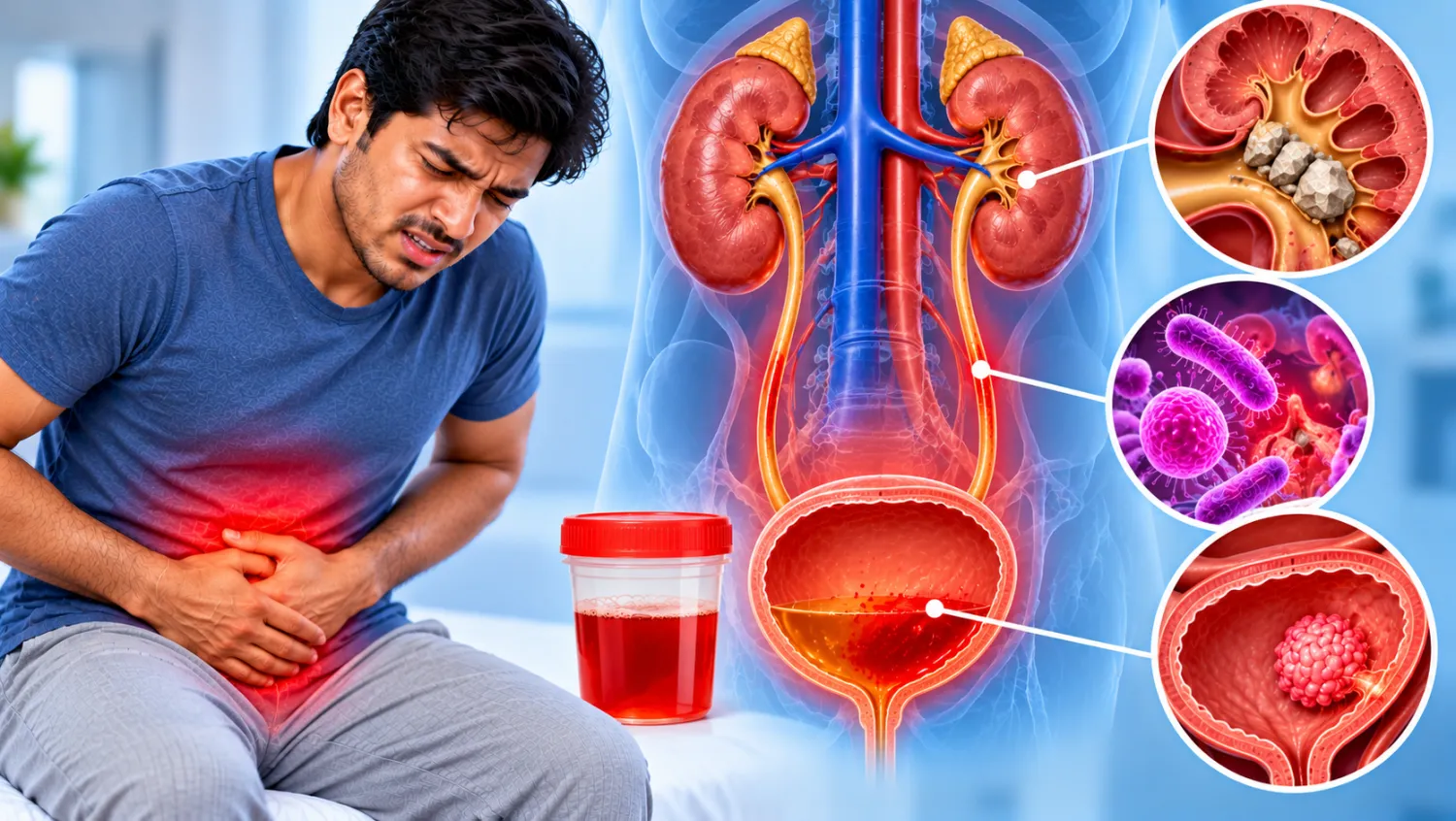
Haematuria means blood in the urine. It can originate anywhere along the urinary tract, including the kidneys, ureters, bladder or urethra.
Visible haematuria changes the urine’s appearance. Microscopic haematuria is detected through testing without an obvious colour change.
Red urine does not always contain blood. Certain foods, medicines or contamination from menstrual bleeding can cause confusion. A properly collected sample helps clarify the finding.
Haematuria Causes: What Are the Possibilities?
Possible explanations include:
- Urinary tract infections.
- Kidney or bladder stones.
- Prostate enlargement.
- Inflammation affecting the kidneys.
- Recent urinary procedures or injury.
- Tumours involving the urinary tract.
Strenuous exercise can sometimes contribute, but it should not become an automatic explanation for repeated bleeding.
Tell your doctor about medicines, particularly anticoagulants. These can increase bleeding, but do not remove the need to investigate its source.
Painless Blood in Urine: Why Does It Matter?
The absence of pain does not establish that bleeding is harmless.
Bladder and kidney conditions, including cancer, may bleed without causing discomfort. Bleeding can also come and go, so clear urine the next day does not exclude an underlying problem.
Risk assessment considers age, smoking history, previous urinary conditions and other exposures. However, younger people also need appropriate assessment.
For blood in urine treatment Bangalore patients should report the episode even if they currently feel completely well.
Blood in Urine With Pain: What Can It Suggest?
Pain provides clues, but cannot confirm a diagnosis.
Burning during urination, urgency and frequent toilet visits may suggest infection. Strong pain travelling from the side or back towards the groin may suggest a stone.
Kidney Stone or UTI?
A urine examination, culture when appropriate and selected imaging help distinguish them.
Both can occur together. A blocked kidney with infection can become dangerous and may require urgent drainage as well as antibiotics.
Do not start leftover antibiotics or assume that a previous stone explains a new episode.
When Should You Seek Emergency Care?
Go to an emergency department if bleeding occurs with:
- Inability to pass urine, especially with clots.
- Heavy or continuing bleeding.
- Faintness, collapse or marked weakness.
- Fever or chills with flank pain.
- Severe pain or repeated vomiting.
Clots can obstruct bladder drainage. Fever with a suspected urinary blockage requires urgent assessment.
Do not force large quantities of water if you cannot urinate.
Bladder Cancer Warning Signs
Visible bleeding is an important warning sign. Other possible symptoms include persistent urinary urgency, increased frequency or discomfort that does not resolve as expected.
These symptoms often have noncancerous causes. Investigation is needed to distinguish them.
Repeatedly treating presumed infection without reviewing persistent or returning bleeding can delay diagnosis. Tell the doctor if earlier antibiotics did not resolve the problem.
What Tests Might Be Recommended?
For blood in urine treatment Bangalore, investigations should reflect whether bleeding is visible, the clinical findings and individual risk.
Urine and Blood Tests
Urinalysis checks for red blood cells and other abnormalities. A culture helps identify bacterial infection when suspected.
Blood tests may assess kidney function and anaemia. Protein or other findings suggesting kidney inflammation may require nephrology assessment.
After treatment for an infection, your doctor may repeat urine testing to confirm that bleeding has resolved.
Ultrasound or CT Imaging
Imaging examines the kidneys and urinary tract for stones, obstruction or other abnormalities.
The appropriate scan depends on the suspected cause, kidney function and circumstances such as pregnancy. Not everyone needs the same imaging study.
Cystoscopy Procedure
A thin camera passes through the urethra to inspect the bladder lining. Flexible examinations are commonly performed using local anaesthetic gel.
It can reveal abnormalities that imaging alone may miss. Whether it is necessary depends on the bleeding pattern and risk assessment.
Urine Cytology Test
This examines shed cells for suspicious changes. It may help in selected situations, particularly when certain bladder abnormalities are suspected.
It is not a routine replacement for cystoscopy, and a negative result cannot reliably exclude every bladder cancer.
How Is the Bleeding Treated?
Treatment addresses the cause rather than urine colour alone.
A bacterial infection may need antibiotics. Stones may require observation, medicines or a procedure, depending on size, obstruction and infection. Prostate or kidney conditions need their own management.
If an abnormal growth is found, tissue assessment guides further treatment.
Do not stop prescribed blood thinners independently. The treating team must balance bleeding against the reason they were prescribed.
What If Initial Tests Are Normal?
Reassuring findings are useful, but follow-up advice still matters. Ask what to do if visible bleeding returns or urinary symptoms persist.
Keep records of investigations and report new episodes rather than assuming an earlier normal result applies indefinitely.
Conclusion
Blood in urine deserves attention whether it is painful, painless or temporary. Prompt assessment helps identify treatable causes and avoid overlooking serious disease.
For blood in urine treatment Bangalore, book an assessment at DHEE Hospitals. If you need a urologist Kanakapura Road, its urology team can review your symptoms and recommend appropriate investigations; emergency warning signs need immediate care.
Frequently Asked Questions
Should one episode be checked?
Yes, even if the urine clears afterwards.
Does red urine always contain blood?
No. Testing can help distinguish other colour changes.
Can infection cause bleeding?
Yes, but persistent bleeding needs reassessment.
Does painless bleeding mean cancer?
No, but cancer is one cause that needs consideration.
Will everyone need cystoscopy?
No. The decision depends on clinical risk and findings.
Can blood thinners explain everything?
No. The source may still require investigation.
Can clots become an emergency?
Yes, particularly if they prevent urination.
Should I repeat antibiotics myself?
No. Seek reassessment rather than repeating treatment independently.





 WhatsApp Us