 9900550134
 info@dheehospitals.com


 Trauma and Orthopaedics
 Pediatrics
 Gastroenterology
 Obstetrics and Gynecology
 Neurosurgery and Neurology
 Family Medicine
 Cardiology
 General Medicine
 Oncology and Immunology
 Oncology
 Nephrology
 Nutrition and Dietetics
 Adult Intensive Care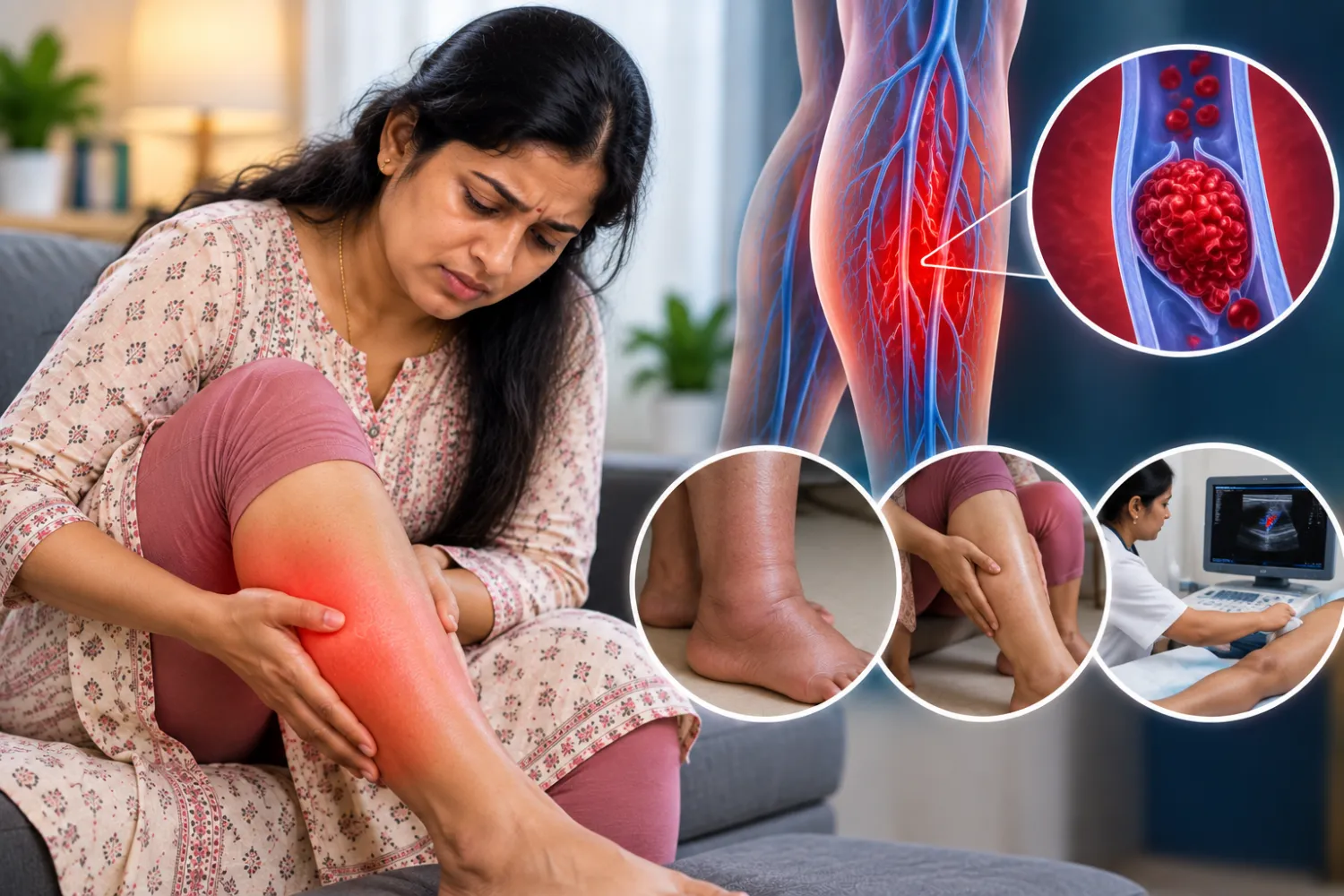
Published on :Oct 5, 2026
Leg pain and swelling are often blamed on a muscle strain, long working hours or a minor injury. However, when these symptoms develop suddenly in one leg, especially after surgery, prolonged travel or extended bed rest, they may indicate deep vein thrombosis.
Deep vein thrombosis, or DVT, occurs when a clot forms in a deep vein, most commonly in the calf, thigh or pelvis. A blood clot in leg can partially or completely block blood flow. More importantly, part of the clot can break away, travel to the lungs and cause a potentially life-threatening pulmonary embolism.
What Are the Common Deep Vein Thrombosis Symptoms?
DVT does not always produce obvious symptoms. When signs are present, they may include:
- One-sided leg swelling
- Calf or thigh pain
- Tenderness that may feel like a cramp
- Warmth over the affected area
- Red, darkened or discoloured skin
- A heavy or tight feeling in the leg
- Visible surface veins
These deep vein thrombosis symptoms can resemble muscle injury, cellulitis or other circulation problems. It is not possible to confirm or exclude DVT by looking at the leg or pressing the calf at home.
The combination of calf pain and blood clot risk factors should be assessed promptly. Avoid massaging the painful or swollen leg while waiting for medical evaluation.
Why Does a Blood Clot Develop?
Risk factors include:
- Recent operation or hospital admission
- Long periods of bed rest
- A fracture or major injury
- Long-distance travel with limited movement
- Cancer or cancer treatment
- Pregnancy and the weeks after delivery
- Oestrogen-containing contraceptives or hormone therapy
- Obesity
- Smoking
- Previous DVT or pulmonary embolism
- Inherited clotting disorders
- Increasing age
A person may develop DVT even without an obvious risk factor. Therefore, new unexplained swelling in one leg should not be ignored.
Why Is DVT After Surgery a Concern?
Surgery can increase clotting activity, while anaesthesia, pain and reduced movement slow blood flow in the legs. The likelihood of DVT after surgery is particularly relevant after major orthopaedic, abdominal or pelvic procedures.
Hospitals may reduce this risk through:
- Early movement after surgery
- Leg and ankle exercises
- Compression devices or stockings for selected patients
- Preventive anticoagulant medicines
- Adequate hydration when appropriate
How Is DVT Diagnosed?
The doctor will review the symptoms and risk factors before examining both legs. Since several conditions can mimic DVT, testing is usually needed.
Doppler Test for DVT
A Doppler test for DVT, commonly performed as a compression ultrasound, uses sound waves to assess blood flow and look for a clot in the deep veins. It is non-invasive and does not use radiation.
If the first ultrasound is negative but clinical suspicion remains high, the doctor may recommend a repeat scan or another imaging test.
D-Dimer Blood Test
D-dimer is a substance produced when a clot breaks down. A normal result may help rule out DVT in selected low-risk patients. However, infection, pregnancy, surgery, trauma and increasing age can also raise D-dimer levels. A positive result does not confirm DVT on its own.
How Is DVT Treated?
DVT treatment Bangalore usually begins with anticoagulant medicines, often called blood thinners. They do not instantly dissolve the existing clot. Instead, they reduce the chance of the clot growing and allow the body to break it down gradually.
The type and duration of anticoagulant treatment depend on:
- Where the clot is located
- Whether it was triggered by surgery or another temporary factor
- Bleeding risk
- Kidney and liver function
- Pregnancy or cancer
- Previous clotting episodes
Patients must take these medicines exactly as prescribed. Because anticoagulants can increase bleeding, contact the treating doctor for unusual bruising, persistent nosebleeds, blood in urine, black stools or vomiting blood.
In selected severe cases, medicines that dissolve clots or a catheter-based procedure may be considered. A vascular surgeon Bangalore may also evaluate extensive clots, threatened circulation or symptoms that continue despite standard care.
What Are the Pulmonary Embolism Warning Signs?
A pulmonary embolism happens when part of a clot travels to the lungs. Recognising pulmonary embolism warning signs can save a life.
Seek emergency care immediately for:
- Sudden shortness of breath
- Sharp chest pain, particularly while breathing in
- Rapid heartbeat
- Coughing up blood
- Unexplained fainting or severe dizziness
- Bluish lips
- Sudden weakness, sweating or collapse
Can DVT Be Prevented?
Not every clot can be prevented, but risk can often be reduced. Move regularly during long journeys, perform ankle movements, stay hydrated and follow medical advice after surgery. People with previous DVT should ask their doctor about precautions before travel, surgery, pregnancy or starting hormonal medication.
Do not begin aspirin or anticoagulants on your own. Aspirin is not a substitute for prescribed DVT prevention or treatment.
Conclusion
Sudden pain and swelling in one leg may be more than a muscle problem. Prompt examination and ultrasound can identify DVT before it causes serious complications. Treatment is usually effective when the condition is recognised early and anticoagulants are taken correctly.
If you develop unexplained one-sided leg swelling or calf pain, visit DHEE Hospitals for urgent assessment. Call emergency services immediately if these symptoms occur with chest pain, breathlessness, coughing blood or fainting.
Frequently Asked Questions
1. Can DVT occur without leg swelling?
Yes. Some people have pain, tenderness or no clear leg symptoms at all.
2. Does calf pain always mean a blood clot?
No. Muscle strain, injury and other conditions can cause calf pain, but sudden unexplained pain with swelling requires assessment.
3. Can walking dislodge a DVT?
Patients are often encouraged to walk after anticoagulation begins, depending on their condition. Follow the treating doctor’s advice.
4. How quickly should suspected DVT be checked?
It should be assessed urgently, preferably the same day, particularly when risk factors are present.
5. Is ultrasound painful?
A Doppler ultrasound is usually painless, although gentle pressure over a tender area may cause brief discomfort.
6. How long is anticoagulant treatment required?
Treatment often lasts several months, but the duration depends on the cause, clot location and recurrence risk.
7. Can DVT return after treatment?
Yes. Previous DVT increases the risk of another clot, making prevention and follow-up important.
8. Should a swollen leg be massaged?
No. Avoid massaging sudden unexplained swelling or pain until DVT has been medically excluded.





 WhatsApp Us