 9900550134
 info@dheehospitals.com


 Trauma and Orthopaedics
 Pediatrics
 Gastroenterology
 Obstetrics and Gynecology
 Neurosurgery and Neurology
 Family Medicine
 Cardiology
 General Medicine
 Oncology and Immunology
 Oncology
 Nephrology
 Nutrition and Dietetics
 Adult Intensive Care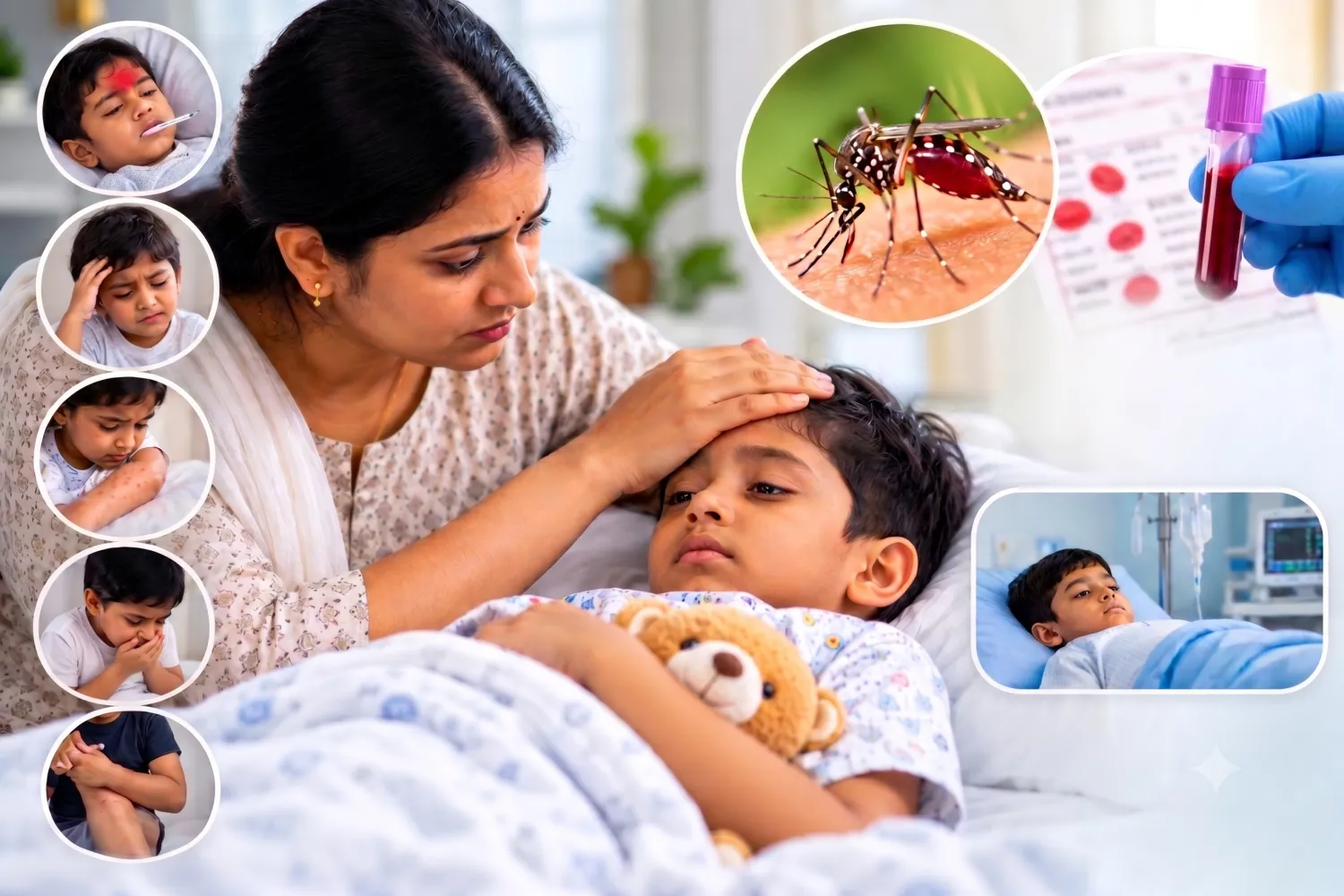
Published on :Oct 5, 2026
Dengue is a mosquito-borne viral infection that can affect children of all ages. While many children recover with fluids, rest and close monitoring, some can become seriously unwell within a short time. The most important thing for parents to understand is that a falling fever does not always mean the illness is over.
Recognising dengue symptoms in children, watching for changes and getting timely medical care can prevent complications. Parents should also remember that the platelet count in dengue is only one part of the medical assessment. A doctor will consider the child’s symptoms, hydration, blood pressure, urine output and blood-test trends before recommending hospital admission.
Common Dengue Symptoms in Children
Dengue may initially look like another viral fever. Symptoms generally begin several days after the bite of an infected mosquito and may include:
- Sudden high fever
- Headache or pain behind the eyes
- Muscle, bone or joint pain
- Nausea or vomiting
- Tiredness and irritability
- Reduced appetite
- Skin rash
- Mild bleeding from the nose or gums
- Easy bruising
Understanding the Three Dengue Fever Stages
Knowing the usual dengue fever stages helps parents understand why continued observation is necessary.
1. Febrile Phase
The febrile phase commonly lasts between two and seven days. The child may have high fever, body aches, headache, vomiting or a rash. Maintaining hydration is especially important during this period.
2. Critical Phase
The critical phase usually begins when the fever starts settling and may last approximately 24–48 hours. Some children develop leakage of fluid from small blood vessels, bleeding or circulatory problems during this stage.
This is why parents should not assume that a child is recovering simply because the temperature has returned to normal. Dengue warning signs in children frequently appear as the fever comes down.
3. Recovery Phase
During recovery, appetite, energy and urine output generally improve. The leaked fluid is gradually reabsorbed, although weakness or itching may continue for several days.
What Do Low Platelets in Dengue Mean?
Platelets help the blood clot. Dengue can cause their number to fall, so doctors may repeat a complete blood count and monitor the trend.
However, low platelets in dengue do not, by themselves, show how severe the illness is. A child with a low count may remain clinically stable, while another child with a higher count may have dehydration, plasma leakage or early shock.
Doctors therefore assess several factors together:
- The speed at which the platelet count is falling
- Bleeding or bruising
- Haematocrit changes
- Blood pressure and circulation
- Fluid intake and urine output
- Breathing and alertness
- Persistent vomiting or abdominal pain
Warning Signs That Need Hospital Care
Take the child to an emergency department immediately if any of the following develops:
- Severe or increasing abdominal pain
- Repeated or persistent vomiting
- Bleeding from the nose or gums
- Blood in vomit or black stools
- Unusual sleepiness, confusion or restlessness
- Rapid or difficult breathing
- Cold, pale or clammy hands and feet
- Very little or no urine
- Inability to drink or keep fluids down
- Sudden weakness, dizziness or fainting
- Swelling of the abdomen
- Worsening symptoms after the fever subsides
Common child dehydration symptoms include a dry mouth, sunken eyes, absence of tears, reduced urination, marked thirst and unusual drowsiness. Infants may also have fewer wet nappies.
Severe dengue can lead to dengue shock syndrome, in which circulation becomes dangerously inadequate. Cold skin, a weak rapid pulse, restlessness, low blood pressure and reduced urine output are possible warning signs. This is a medical emergency.
How Is Dengue Treated in Children?
There is no specific antiviral medicine that cures dengue. Care focuses on hydration, fever relief, monitoring and early management of complications. Families seeking dengue treatment for children Bangalore should choose a facility with paediatric assessment, laboratory monitoring and emergency support.
Treatment may include:
- Oral fluids or oral rehydration solution
- Paracetamol in the dose advised for the child’s weight
- Blood-count and haematocrit monitoring
- Carefully calculated intravenous fluids when required
- Close observation for bleeding, shock or organ involvement
A child may require admission for warning signs, poor oral intake, significant dehydration, breathing difficulty, bleeding, unstable circulation or severe organ involvement. Access to a paediatric emergency Bangalore service becomes especially important if the condition changes at night or progresses rapidly.
Conclusion
Most children recover from dengue when symptoms are recognised early and hydration and monitoring are handled properly. Do not focus only on the platelet report or wait for visible bleeding. If your child develops persistent vomiting, abdominal pain, drowsiness, reduced urination or any other warning sign, visit DHEE Hospitals or the nearest paediatric emergency department without delay.
Frequently Asked Questions
1. When should a child with dengue be admitted?
Admission may be required for warning signs, dehydration, persistent vomiting, bleeding, breathing problems, shock, poor oral intake or concerning examination and blood-test findings.
2. Is a low platelet count always dangerous?
No. The number must be interpreted with symptoms, bleeding, haematocrit, circulation and the pattern of change.
3. Does a child need platelets when the count falls below 50,000?
Not automatically. The treating doctor decides based on active bleeding and the child’s overall condition rather than one fixed number.
4. Can dengue become severe after the fever stops?
Yes. The critical phase may begin as the fever settles, so careful monitoring must continue.
5. What fluids can be given at home?
Water, oral rehydration solution, soups and other doctor-approved fluids may be offered frequently. Seek care if the child cannot drink or repeatedly vomits.
6. Which fever medicine is considered suitable?
Paracetamol is commonly used in a weight-appropriate dose under medical guidance. Aspirin and ibuprofen should generally be avoided.
7. How often should platelet levels be checked?
The frequency depends on the illness day, symptoms and previous results. Follow the paediatrician’s schedule rather than arranging tests independently.
8. Can dengue spread directly from one child to another?
Dengue is mainly transmitted through the bite of an infected Aedes mosquito. Ordinary contact, sharing food or playing together does not usually spread it.





 WhatsApp Us