 9900550134
 info@dheehospitals.com


 Trauma and Orthopaedics
 Pediatrics
 Gastroenterology
 Obstetrics and Gynecology
 Neurosurgery and Neurology
 Family Medicine
 Cardiology
 General Medicine
 Oncology and Immunology
 Oncology
 Nephrology
 Nutrition and Dietetics
 Adult Intensive Care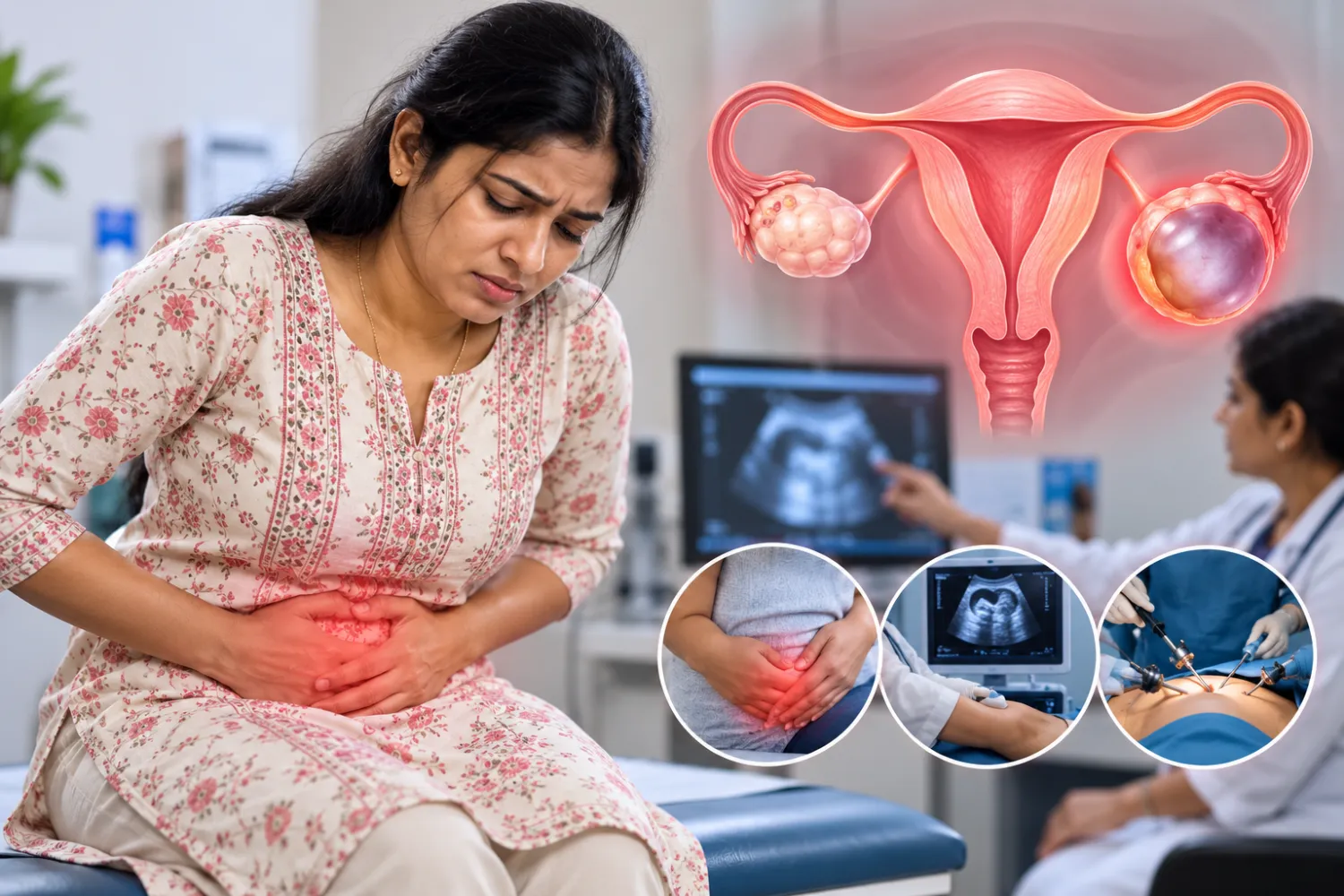
Published on :Oct 5, 2026
A sudden pain low in the abdomen can be worrying, especially when it appears on one side. An ovarian cyst is one possible cause, but cysts do not always produce symptoms or require surgery.
Most ovarian cysts are non-cancerous. Many develop naturally during the menstrual cycle and disappear without treatment. Medical assessment becomes important when pain persists, the cyst grows or warning signs of rupture or twisting appear.
What Is an Ovarian Cyst?
An ovarian cyst is a fluid-filled sac that develops inside or on the surface of an ovary. The ovaries release eggs and produce hormones involved in menstruation and pregnancy.
Common types include:
- Follicular cysts: Form when a follicle does not release an egg
- Corpus luteum cysts: Develop after an egg has been released
- Endometriomas: Associated with endometriosis
- Dermoid cysts: May contain different types of body tissue
- Cystadenomas: Develop from cells on the ovary’s surface
Common Ovarian Cyst Symptoms
Small cysts may cause no discomfort. Ovarian cyst symptoms are more likely when a cyst becomes large, bleeds, ruptures or twists the ovary.
Possible symptoms include:
- Dull or sharp pelvic pain
- Abdominal heaviness or pressure
- Bloating
- Pain during sexual intercourse
- Pain during bowel movements
- Frequent need to urinate
- Irregular or unusually heavy periods
- Feeling full after eating a small amount
- Lower-back discomfort
Where Is Ovarian Cyst Pain Located?
The typical ovarian cyst pain location is the lower abdomen or pelvis, often on the side of the affected ovary. The discomfort may be constant, appear during movement or become noticeable around menstruation.
Pain location alone cannot confirm a cyst. Appendicitis, kidney stones and ectopic pregnancy can produce pain in a similar area. A pregnancy test may therefore be necessary in anyone who could be pregnant.
Ovarian Cyst Rupture Symptoms
A cyst can occasionally break open and release fluid or blood into the pelvis. Ovarian cyst rupture symptoms may include:
- Sudden, sharp pelvic pain
- Pain after exercise or sexual intercourse
- Abdominal tenderness
- Light vaginal bleeding
- Nausea
- Dizziness or weakness
Some ruptured cysts cause mild symptoms and can be monitored. Others lead to significant internal bleeding.
What Is Ovarian Torsion?
Ovarian torsion happens when the ovary twists around the tissues that support it. The twisting can reduce or completely stop its blood supply.
The ovarian torsion risk can increase when a cyst makes the ovary larger or heavier. Warning signs include:
- Sudden, severe one-sided pelvic pain
- Nausea or vomiting
- Pain that comes and goes
- Abdominal tenderness
How Is an Ovarian Cyst Diagnosed?
The doctor will ask about pain, menstrual cycles, pregnancy possibility and previous cysts. A pelvic examination may detect tenderness or swelling.
Ovarian Cyst Ultrasound
An ovarian cyst ultrasound uses sound waves to create images of the ovaries. It can show:
- Cyst size and location
- Whether it contains fluid, solid tissue or both
- The thickness of its walls
- Blood flow around the ovary
- Whether the cyst has changed over time
The scan may be performed across the abdomen or with a slim transvaginal probe. Ultrasound does not use radiation.
Does Every Ovarian Cyst Need Treatment?
No. Treatment depends on:
- Age and menopausal status
- Severity of symptoms
- Cyst size
- Ultrasound appearance
- Whether the cyst is growing
- Pregnancy plans
- Risk of torsion, rupture or cancer
For small, simple cysts without significant symptoms, the doctor may recommend observation and a repeat ultrasound. Pain relief may be prescribed when suitable.
When Is Ovarian Cyst Surgery Necessary?
Ovarian cyst surgery may be recommended when:
- Pain is persistent or severe
- The cyst is large or continues growing
- The cyst appears complex on ultrasound
- Torsion or significant rupture is suspected
- The cyst remains after several menstrual cycles
- The patient has gone through menopause
- Cancer cannot be confidently ruled out
- The cyst affects nearby organs
What Is a Laparoscopic Ovarian Cystectomy?
A laparoscopic ovarian cystectomy is keyhole surgery used to remove a cyst while preserving healthy ovarian tissue whenever possible.
The surgeon makes small abdominal incisions and uses a camera and fine instruments to separate the cyst from the ovary. The removed tissue may be sent to a laboratory for examination.
Laparoscopy generally involves smaller wounds and a shorter recovery than open surgery. Open surgery may still be advised for a very large cyst, suspected cancer or a complex emergency.
Recovery After Ovarian Cyst Surgery
Recovery depends on the operation, cyst size and overall health. Mild abdominal discomfort, bloating and tiredness are common after laparoscopy.
Follow the surgeon’s advice about:
- Wound care
- Pain medicines
- Physical activity
- Driving
- Returning to work
- Sexual activity
- Follow-up appointments
Contact the medical team for fever, worsening pain, heavy bleeding, increasing swelling or an unpleasant-smelling discharge after surgery.
Conclusion
Most ovarian cysts are harmless, but persistent pain, sudden severe symptoms or concerning ultrasound findings need proper assessment. Early diagnosis can identify rupture or torsion and help avoid unnecessary surgery. For ovarian cyst treatment in Bangalore, consult DHEE Hospitals or book an appointment with a gynaecologist near Kanakapura Road.
Frequently Asked Questions
1. Can an ovarian cyst disappear naturally?
Yes. Many functional cysts resolve within a few menstrual cycles without treatment.
2. What size ovarian cyst requires surgery?
There is no single size for every patient. Symptoms, age, growth and ultrasound appearance also guide the decision.
3. Can an ovarian cyst delay periods?
Some functional cysts can affect hormone patterns and cause delayed, irregular or heavier periods.
4. Can ovarian cysts affect fertility?
Most cysts do not. Endometriomas and some underlying conditions may affect fertility, depending on their severity.
5. Is ovarian cyst rupture always an emergency?
No. Some ruptures cause mild symptoms. Severe pain, fainting or signs of internal bleeding require emergency care.
6. Can ovarian cysts become cancerous?
Most are benign. The risk is higher after menopause and when a cyst has suspicious imaging features.
7. Can exercise cause an ovarian cyst to rupture?
A cyst may occasionally rupture during strenuous activity, but ordinary exercise does not usually cause cyst formation.
8. Can an ovarian cyst return after surgery?
Yes. Surgery removes the existing cyst, but another cyst may develop later in the same or opposite ovary.





 WhatsApp Us