 9900550134
 info@dheehospitals.com


 Trauma and Orthopaedics
 Pediatrics
 Gastroenterology
 Obstetrics and Gynecology
 Neurosurgery and Neurology
 Family Medicine
 Cardiology
 General Medicine
 Oncology and Immunology
 Oncology
 Nephrology
 Nutrition and Dietetics
 Adult Intensive Care
Published on :Oct 5, 2026
An upper GI endoscopy allows a doctor to examine the upper digestive system without making a surgical incision. It can help find the reason behind persistent acidity, swallowing difficulty, unexplained vomiting, bleeding or recurring abdominal pain.
The test is also called gastroscopy, upper endoscopy or oesophagogastroduodenoscopy. Although its name sounds complicated, it is usually a short procedure, and most patients return home the same day.
What Is an Upper GI Endoscopy?
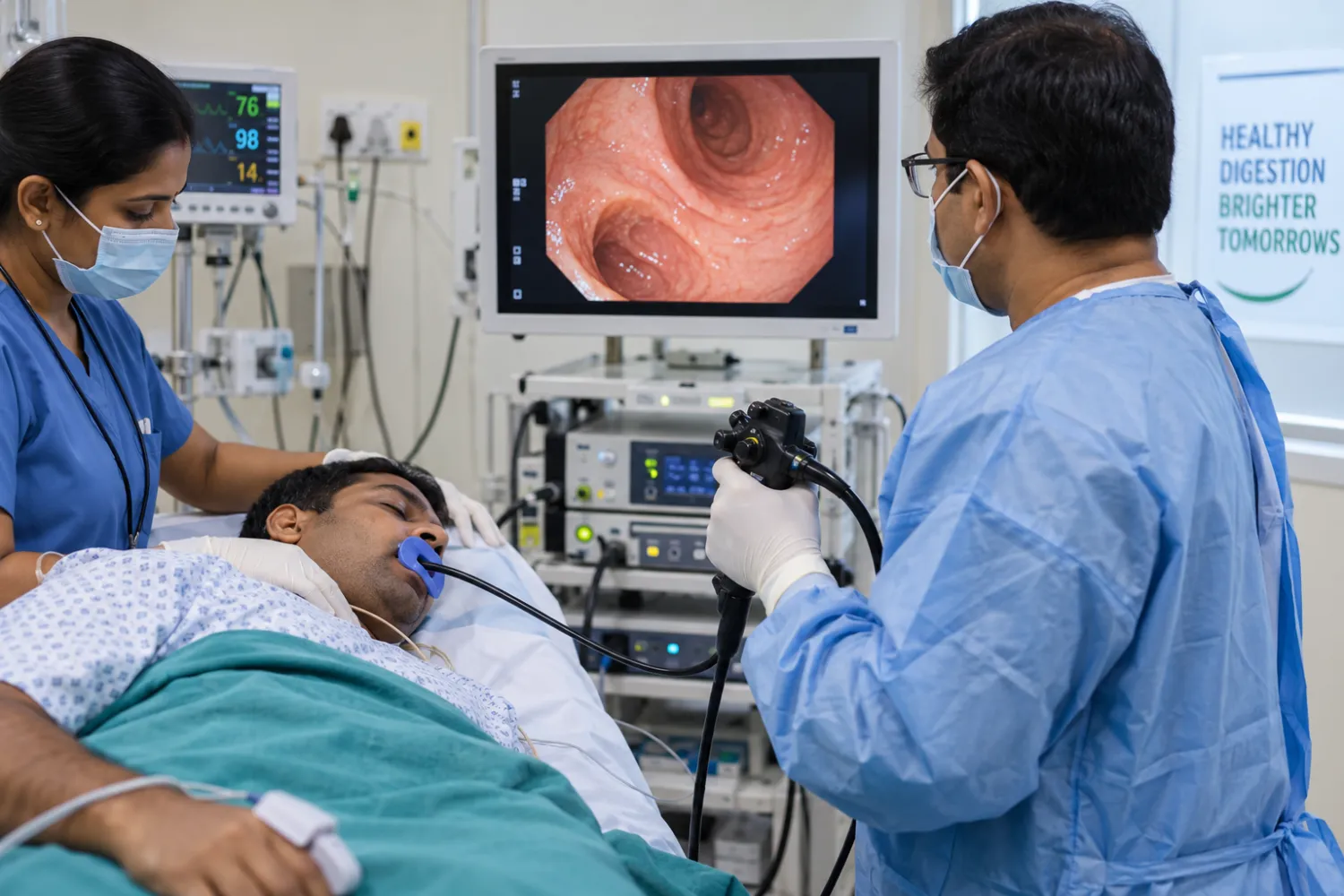
During an upper GI endoscopy, a gastroenterologist passes a thin, flexible tube called an endoscope through the mouth. A tiny camera and light at its tip provide a clear view of the:
- Oesophagus or food pipe
- Stomach
- Duodenum, the first part of the small intestine
The endoscope does not interfere with breathing. Images are displayed on a monitor, allowing the doctor to examine the digestive lining closely.
A gastroscopy test can also be used to collect small tissue samples, remove certain growths, widen a narrowed area or control bleeding. It therefore helps with both diagnosis and treatment.
Why Is an Upper GI Endoscopy Done?
A doctor may recommend an endoscopy for stomach pain when symptoms continue despite treatment or when warning signs are present.
Common reasons include:
- Persistent upper abdominal pain
- Frequent acidity or heartburn
- Difficulty or pain while swallowing
- Repeated nausea or vomiting
- Vomiting blood
- Black, sticky stools
- Unexplained anaemia
- Loss of appetite
- Unintentional weight loss
- Suspected stomach ulcer
- Persistent indigestion
Upper endoscopy may help identify gastritis, ulcers, gastro-oesophageal reflux complications, coeliac disease, narrowing of the food pipe, enlarged veins, polyps or tumours.
It may also be advised to monitor known conditions, such as Barrett’s oesophagus, or to check healing after treatment.
Can a Biopsy Be Taken During Endoscopy?
Yes. A biopsy involves collecting a very small tissue sample through the endoscope. It may be taken to test for conditions such as:
- Helicobacter pylori infection
- Coeliac disease
- Inflammation
- Barrett’s oesophagus
- Precancerous or cancerous changes
A biopsy does not automatically mean that cancer is suspected. It is commonly performed to confirm or rule out several digestive conditions. Patients generally do not feel the tissue sample being collected.
Endoscopy Preparation: What Should You Do?
Correct endoscopy preparation helps the doctor see the digestive tract clearly and reduces the chance of food or liquid entering the lungs during the procedure.
Follow Your Endoscopy Fasting Instructions
Patients are generally asked to stop eating and drinking for several hours before the test. The exact fasting period can vary according to the appointment time, medical condition and type of sedation.
Many centres recommend no food for approximately six to eight hours, but patients must follow the specific endoscopy fasting instructions provided by their hospital. Do not assume that water, tea, chewing gum or sweets are permitted unless the medical team confirms it.
Discuss Your Medicines
Tell the doctor if you take:
- Blood-thinning medicines
- Diabetes medicines or insulin
- Blood-pressure medication
- Iron supplements
- Painkillers
- Herbal products
Do not stop a prescribed medicine independently. The doctor will explain whether its timing or dose needs to change.
Also report allergies, pregnancy, heart or lung conditions, bleeding disorders and previous reactions to sedation.
Arrange Transport Home
If sedation is planned, arrange for a responsible adult to take you home. You may be instructed not to drive, operate equipment, drink alcohol or make important decisions for the remainder of the day.
What Happens During the Endoscopy Procedure?
Before the test, a nurse may check your blood pressure, pulse and oxygen level. Dentures, glasses and removable dental appliances may need to be taken out.
You may receive:
- A local anaesthetic spray to numb the throat
- Intravenous sedation to help you feel relaxed
- Both, depending on the hospital’s protocol
During the endoscopy procedure, you will usually lie on your left side. A mouth guard protects your teeth and the endoscope. The doctor then gently guides the flexible tube through your mouth and into the upper digestive tract.
Air may be introduced to improve visibility, which can cause temporary fullness or burping. The examination itself commonly takes around 10 to 20 minutes, although treatment performed during the procedure can take longer.
Is Endoscopy Painful?
A common question is, “Is endoscopy painful?” Most patients describe it as uncomfortable rather than painful. The throat spray reduces gagging, while sedation can make the experience easier and may limit memory of the test.
You can still breathe normally. The medical team monitors your oxygen level, pulse and overall comfort throughout the procedure.
Conclusion
Upper GI endoscopy can provide answers when digestive symptoms continue or warning signs appear. Proper preparation makes the examination safer and more effective. For an upper GI endoscopy in Bangalore, consult DHEE Hospitals or speak with a qualified gastroenterologist near Kanakapura Road to understand whether the test is appropriate for your symptoms.
Frequently Asked Questions
1. How long does an upper GI endoscopy take?
A diagnostic examination commonly takes around 10 to 20 minutes. Additional treatment or procedures may require more time.
2. Will I be unconscious during an endoscopy?
Not necessarily. Many patients receive light or moderate sedation, which makes them relaxed and drowsy but not fully unconscious.
3. Can I breathe while the endoscope is in place?
Yes. The tube enters the food pipe rather than the airway and does not prevent normal breathing.
4. Can I eat immediately after a gastroscopy?
Wait until the medical team confirms it is safe. After throat spray, eating too early may increase the risk of choking.
5. Is a biopsy during endoscopy painful?
Patients generally do not feel the biopsy being taken because the digestive lining does not sense it like the skin does.
6. Can an endoscopy detect stomach cancer?
It can identify suspicious areas and allow a biopsy to be collected. Laboratory examination confirms whether abnormal cells are present.
7. Can I drive home after an endoscopy?
Do not drive if you have received sedation. Arrange transportation and follow the hospital’s post-procedure instructions.
8. What is the difference between endoscopy and gastroscopy?
Endoscopy is a broad term for examining internal organs with a scope. Gastroscopy specifically examines the oesophagus, stomach and duodenum.





 WhatsApp Us