 9900550134
 info@dheehospitals.com


 Trauma and Orthopaedics
 Pediatrics
 Gastroenterology
 Obstetrics and Gynecology
 Neurosurgery and Neurology
 Family Medicine
 Cardiology
 General Medicine
 Oncology and Immunology
 Oncology
 Nephrology
 Nutrition and Dietetics
 Adult Intensive Care
Published on :Oct 5, 2026
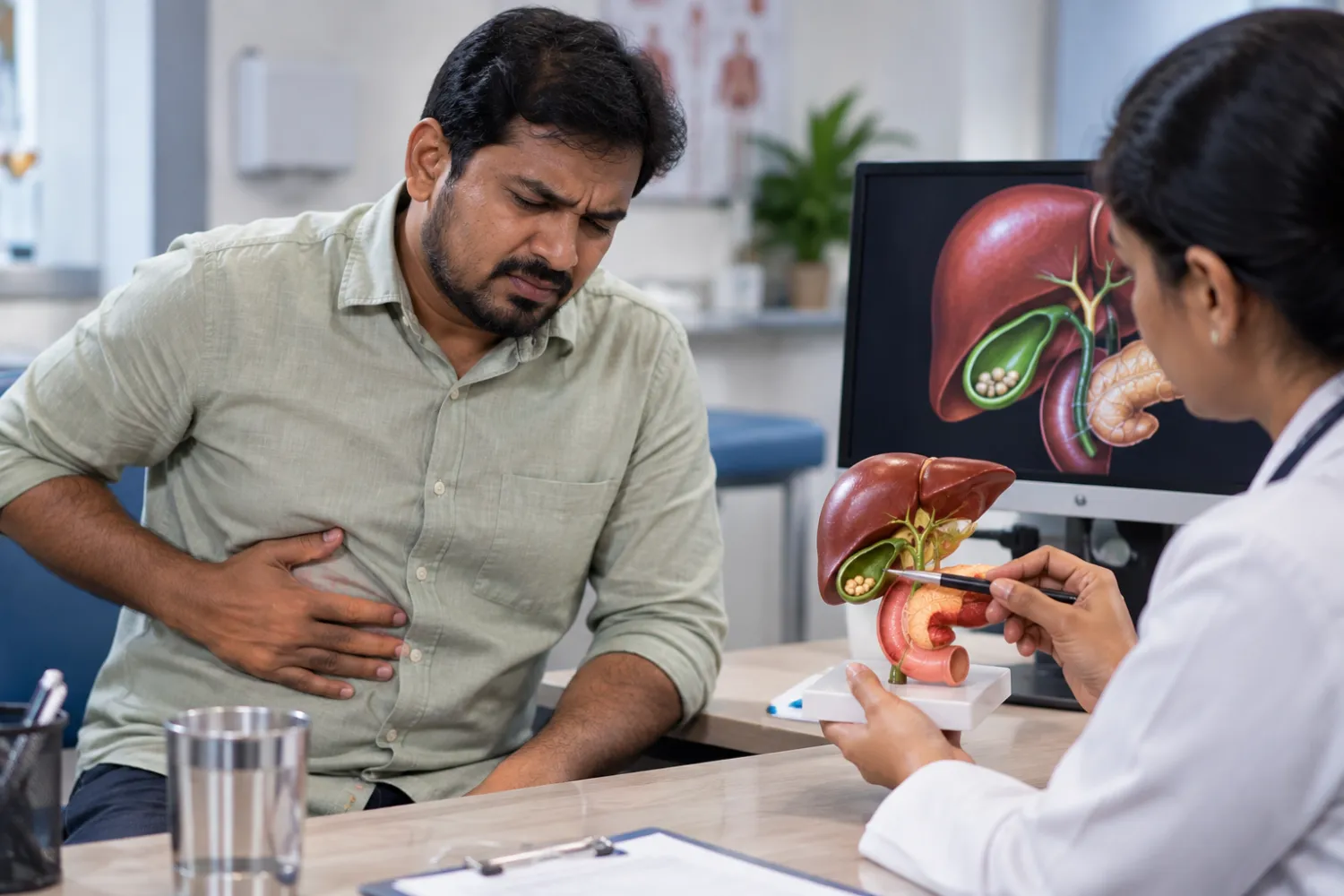
Gallstones can remain silent for years. In many people, they are discovered during an ultrasound performed for another reason. Problems begin when a stone blocks the normal flow of bile, causing sudden pain, inflammation or infection.
Gallstones are hardened deposits, usually made from cholesterol or bilirubin, that develop inside the gallbladder. They can be as small as grains of sand or grow as large as a golf ball.
Not everyone with gallstones needs surgery. Treatment depends on symptoms, test results and whether complications have developed.
What Causes Gallstones?
The gallbladder is a small organ beneath the liver. It stores bile, a digestive fluid that helps the body process fats. Gallstones can form when the chemical balance of bile changes or when the gallbladder does not empty properly.
Risk factors include:
- Being overweight or obese
- Rapid weight loss
- Pregnancy
- Increasing age
- Family history of gallstones
- Diabetes
- A diet high in refined carbohydrates
- Certain blood, liver or intestinal conditions
Common Gallbladder Stone Symptoms
Common gallbladder stone symptoms include:
- Sudden upper abdominal pain
- Pain after a heavy or fatty meal
- Nausea or vomiting
- Indigestion or abdominal discomfort
- Pain spreading to the back
- Pain near the right shoulder blade
- Bloating after meals
A gallbladder attack may last from several minutes to a few hours. Once a person has experienced one attack, further episodes may occur.
Where Is Gallstone Pain Located?
The usual gallstone pain location is the upper-right side of the abdomen, beneath the ribs. Some people feel pain in the centre of the upper abdomen. It may spread towards the back or right shoulder.
Gallstone pain is generally steady rather than a brief cramp. It can become intense and may not improve after passing gas, changing position or using the toilet.
When Do Gallstones Become an Emergency?
Seek urgent medical care if abdominal pain is accompanied by:
- Fever or chills
- Yellow skin or eyes
- Dark urine
- Pale stools
- Persistent vomiting
- Severe pain lasting several hours
- Confusion, weakness or fainting
- Pain spreading through the abdomen and back
How Are Gallstones Diagnosed?
An abdominal ultrasound is commonly used to identify gallstones. It can show the number and size of stones and signs of gallbladder inflammation.
Additional investigations may include:
- Liver-function blood tests
- Complete blood count
- CT scan
- MRI-based bile-duct imaging, called MRCP
- Endoscopic ultrasound
- HIDA scan to assess gallbladder function
The doctor chooses tests according to the symptoms and the possibility of a blocked bile duct.
Gallstone Treatment Options
The appropriate gallstone treatment in Bangalore or elsewhere depends on whether the stones are silent, painful or causing complications.
Observation for Silent Gallstones
Gallstones found accidentally without symptoms often do not require immediate surgery. The patient may be advised to recognise warning signs and attend follow-up appointments when recommended.
Medicines are not routinely used to treat most gallstones. Drugs that dissolve certain cholesterol stones work slowly, are suitable for limited cases and do not prevent stones from returning.
Bile Duct Stones Treatment
Stones that leave the gallbladder and enter the common bile duct can block bile flow. They may cause jaundice, infection or pancreatitis.
Bile duct stones treatment often involves endoscopic retrograde cholangiopancreatography, or ERCP. During ERCP, an endoscope is passed through the mouth into the digestive tract so the specialist can reach the bile-duct opening and remove the stone. Gallbladder surgery may subsequently be advised to reduce the risk of another episode.
When Is Gallbladder Surgery Required?
Surgery may be recommended when gallstones cause:
- Repeated or severe pain
- Acute gallbladder inflammation
- Bile-duct blockage
- Gallstone pancreatitis
- Jaundice
- Infection
- Significant impact on eating and daily life
Removing only the stones is usually not enough because new stones may form. Therefore, the standard operation removes the gallbladder itself.
What Happens During Laparoscopic Gallbladder Surgery?
Laparoscopic gallbladder surgery, medically called laparoscopic cholecystectomy, is performed under general anaesthesia. The surgeon makes several small abdominal incisions and removes the gallbladder using a camera and specialised instruments.
Many patients can return home on the same day or after a short hospital stay. Open surgery may occasionally be necessary when keyhole surgery is not safe or suitable.
Cholecystectomy Recovery Time
The exact cholecystectomy recovery time varies with the type of surgery, general health and nature of work. Many patients can return to work within one to two weeks after laparoscopic surgery, although jobs involving lifting may require more time.
Temporary tiredness, wound discomfort, loose stools or indigestion may occur. Follow the surgeon’s advice about driving, lifting, exercise and wound care.
Gallstone Diet: What Should You Eat?
Diet cannot dissolve established gallstones, but thoughtful food choices may reduce digestive discomfort and support long-term health.
Choose:
- Vegetables and fresh fruits
- Whole grains
- Beans and lentils
- Lean proteins
- Smaller, regular meals
- Moderate amounts of healthy fats
Common foods to avoid with gallstones, particularly if they trigger pain, include:
- Deep-fried foods
- Fatty or processed meats
- Cream-heavy dishes
- Large amounts of butter or ghee
- Pastries and high-fat desserts
- Highly refined carbohydrates
- Large, heavy meals
Conclusion
Silent gallstones may only need observation, but repeated pain, jaundice, fever or vomiting requires medical assessment. Timely treatment can prevent serious infection and pancreatitis. For personalised advice, consult DHEE Hospitals or schedule an evaluation with a qualified gastro surgeon near Kanakapura Road.
Frequently Asked Questions
1. Can gallstones disappear naturally?
Gallstones generally do not disappear on their own. Silent stones may not need treatment, but symptomatic stones often require medical evaluation.
2. Can diet dissolve gallstones?
No specific food can reliably dissolve existing gallstones. Diet may reduce symptom triggers and support healthier weight management.
3. Does every person with gallstones need surgery?
No. People with gallstones but no symptoms may not need surgery. Repeated symptoms or complications make surgery more likely.
4. Is gallbladder removal a major surgery?
It is usually performed through small incisions using laparoscopy. Open surgery is required in a smaller number of cases.
5. Can a person live normally without a gallbladder?
Yes. Bile flows directly from the liver into the intestine after removal. Most people return to a normal diet gradually.
6. What happens if gallstones are left untreated?
Silent stones may cause no problem. Symptomatic stones can lead to inflammation, infection, jaundice or pancreatitis.
7. Is gallstone pain the same as acidity?
Not usually. Gallstone pain is often steady, affects the upper-right abdomen and may spread to the back or shoulder.
8. Can gallstones return after gallbladder removal?
Gallbladder stones cannot return because the gallbladder has been removed. Rarely, stones may still develop or remain within the bile ducts.





 WhatsApp Us