 9900550134
 info@dheehospitals.com


 Trauma and Orthopaedics
 Pediatrics
 Gastroenterology
 Obstetrics and Gynecology
 Neurosurgery and Neurology
 Family Medicine
 Cardiology
 General Medicine
 Oncology and Immunology
 Oncology
 Nephrology
 Nutrition and Dietetics
 Adult Intensive Care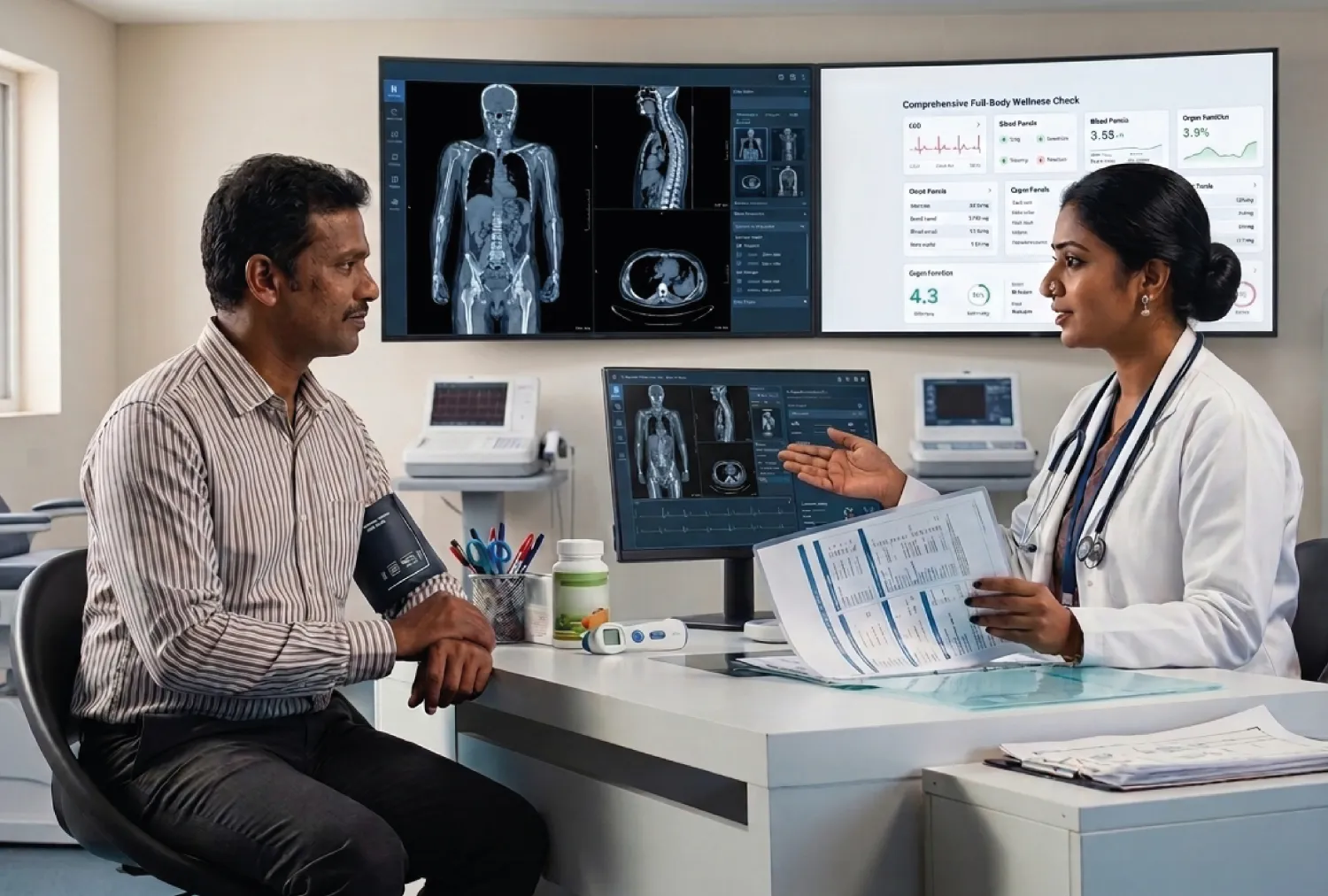
Published on :May 15, 2026
In today’s society, where lifestyle diseases are prevalent, being proactive about becoming and remaining healthy is the most effective method to maintain good health into the future.
Recent studies conducted within the healthcare field also support the idea that as much as 70% of chronic conditions, including diabetes and hypertension, can be controlled or reversed by detecting them early. (Source)
As a result, taking care to attend a preventative health check-up is extremely important. An extensive health screening can serve as a physical road map of your health status, allowing you the opportunity to identify potential health problems before they evolve into a medical emergency.
The Full Body Health Checkup Process
Some individuals experience anxiety associated with going to a medical office for an examination. However, understanding the process of being evaluated as part of an annual full body health checkup process can help relieve some of this anxiety.
The evaluation is not just a series of random blood draws and scans. It is a complete systems evaluation of vital organs that function together to allow our body to survive.
The procedure associated with a full-body health check-up typically starts with a consultation.
The provider will discuss your personal medical history and family history; the lifestyle choices you make. They will understand any indications that you may be suffering from a medical condition that you have ignored .
As the full physical health check-up is conducted, the provider will measure your Body Mass Index (BMI), blood pressure and heart rate, and establish a baseline for your body functioning.
Essential Tests Included in Full Body Checkup
The heart of all screenings is usually through diagnostic tests in the laboratory. The tests performed during the full-body check-up provide insight into the inner workings of the body’s complicated systems.
The Role of Laboratory Investigations
The numerous tests conducted on these blood samples yield a significant amount of data about the patient:
- Lipid Panel: The lipid panel assesses cholesterol levels to evaluate heart health.
- Serum Glucose: Serum glucose evaluates blood sugar levels, and it assists in determining if you are pre-diabetic.
- Kidney and Liver Function Tests: Kidney and liver function tests assess how effectively your body eliminates toxins.
- Complete Blood Count (CBC): The complete blood count is one of the standard tests performed in health assessment packages.
Routine Health Screening Tests and Imaging
The routine health screenings offered in an overall health assessment will typically include an electrocardiogram (ECG) procedure, which will identify heart rhythm and an X-ray of the chest area to determine the health of the lungs.
An abdominal ultrasound will generally be included in the overall health assessment so that the liver, gallbladder, and kidney areas can be evaluated further for possible stones or inflammation.
Benefits of Full Body Health Checkup
Here are some of the primary benefits of full body health checkup, check it out:
- It provides you with peace of mind and can save you significant amounts of money due to the fact that you are less likely to require late-stage treatments.
- Also, when you have a complete health check-up, your physician can offer personal life-coaching solutions based on the results of your check-up.
- This increases your understanding of what happens during a full-body health check-up, giving you the ability to take charge of your own longevity.
There are many more diseases that it’s a perfect time for all to understand preventive health checkup importance and opt for it. Book yours with DHEE Hospitals now!
FAQs
1. Do I need to fast before the check-up?
The majority of the packages out there require fasting between 10 and 12 hours in order to provide accurate blood sugar and cholesterol measurements.
2. How long does it normally take for the entire testing process?
In general, the physical exam and the actual sample collection will take about 3-5 hours, depending on the package you got.
3. How old should I be before I get my first annual health checkup procedure?
Based upon most doctors’ recommendations, you should start getting regular screenings regardless of your age, though some may prefer waiting until they’re 25-30, especially those with a family history of illness.
4. Is getting a check-up going to be painful?
In actuality, it shouldn’t hurt. Unless you get a flu shot or get your blood drawn, the other tests done during your appointment should not provide any pain.
5. Do I need to stop taking my regular medication before testing?
Continue using your current blood pressure and heart medications. You will need to let your coordinator know ahead of time that you are taking these medications.
6. How much time does it take to get the results of a health check-up?
Typically, you’ll be able to obtain results from the lab within 1-2 days, and then you’ll see a doctor to go over your results.
7. Can regular health check-ups detect cancer?
Some of the various tests, such as imaging or tests for certain blood markers, may be able to reveal abnormalities that could result in you needing more tests to confirm whether or not you have cancer.
8. What should I wear when I go in for my appointment?
You should wear loose and comfortable clothing, and do not wear any jewellery because you may have to change clothes for some of the scans or X-rays.





 WhatsApp Us